7 Benefits To Downsized Living

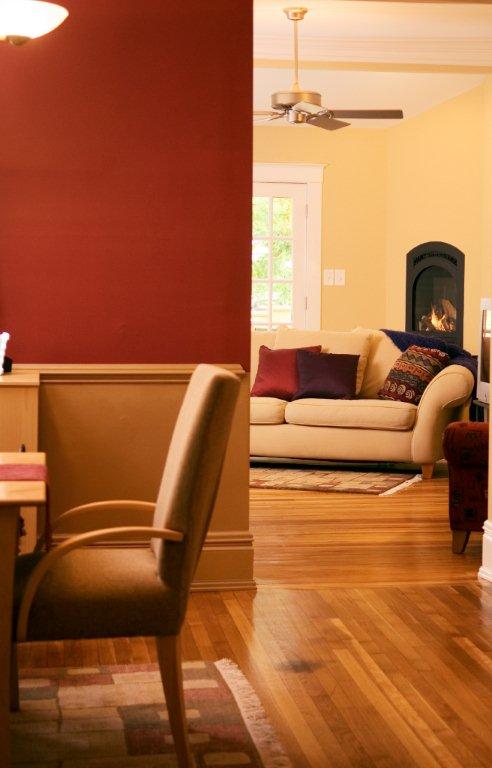
small space livingDownsizing and living in a smaller space can be challenging, but there are numerous benefits to living in a smaller home. Your life often takes a turn for the better with more positive changes emerging. Some of those benefits are noted below.

Spend less time cleaning

In a smaller home you will be spending less time and energy cleaning. Imagine having less floor space to clean, less furniture to vacuum, less items to dust and less carpets to clean. For many, that is reason enough!

Less repairs and maintenance

A smaller home is also much easier to manage and maintain.  Less repairs and maintenance equals less money spent and more time and energy for you to spend doing the things in life you truly enjoy.

More freed up funds for traveling

All that money you are saving on insurance, heating, cooling, taxes and electricity can be used to free up your lifestyle for traveling.  Don’t forget the money you save on decorating as well.  Plus, a smaller home is less of a hassle to leave when you travel than a larger one.  Especially if you have downsized to a condominium or apartment.

A new way of living

Many of my clients make the decision to downsize with the added benefit of opening up a new chapter in their lives.  It represents less upkeep, a new way of living, more time for socialization and trying new things.

Lose the mental baggage

Let’s not forget the psychological benefits of downsizing.  You become mentally free as the more we own, the more stuff owns us and the more mental energy is taken hostage by our stuff.  Downsize and you free up your mind.

Environmentally friendly

If you would describe yourself as environmentally friendly, a smaller home uses less resources to build and maintain which benefits everyone.

Less debt

If the thought of debt keeps you up at night, a paired down lifestyle can help some people free themselves of debt. There will be less temptation to accumulate, overspend and over buy.  Your downsized space will keep those shopping sprees curbed.  If you are trying to save money and keep your credit in good shape consider downsizing your home – your future will thank you for it.

Don’t be afraid to downsize.  Embrace this change with open arms and start a new way of living.  You will not regret it!  If you have questions on how to make this change easier and organized, contact me and I will lead the way for you.

Organizing Your Family’s Home Office Or Command Centre

kitchen_home_office_betweenEvery family needs what I like to call a command centre in or near their kitchen area.  A space that is purposefully carved out to create a home base or home office to handle the piles of paper and multitude of appointments and scheduling that every busy family with children is challenged with these days.

Smaller spaces in new homes have created a big design challenge of how to get the benefits of a home office into the footprint of a smaller space. But with a little creativity, even without four walls of its own, we can still carve out space for a home office or command centre for the busy mom or dad.

It simply means designing a multifunctional space.  What better place than the kitchen for this multi-tasking challenge.  Not only is the kitchen the ground space for your culinary hub, party central, and family headquarters, but now it can work as your home office too.

Begin with your message board

First and foremost you need a create a command centre message board.  This can not only be a clever design element to your space but will also act as a place to post schedules, reminders, notices and even artwork.  This is one example of how a command centre can be presented as a creative design element in your home.organized message board for home base

Update the information frequently so everyone gets into the habit of checking it regularly.  If you make it interesting and appealing your family will be more inclined to check it out. Clever components of ribbon, colourful tacks and a section of chalkboard will make an orderly arrangement for jotting notes and posting.

You can purchase several smaller framed boards as in this image, or you can buy one larger board and use ribbon to divide the board into quadrants, one for each family member.  And don’t forget to attach a mail sorter for stamps, correspondence and writing instruments.

Your kitchen island

Kitchen islands are one of the easiest and most versatile places to tuck a kitchen office. Carve out a drawer or shelving unit to contain your command centre essentials, slide up a streamlined stool and you have a convenient space to pay your office, store your supplies and write notes.

A little nook

If you can’t spare the space on your island, almost every kitchen has a little nook somewhere in or close to the kitchen that doesn’t have a purpose.

Niche mini office command centreReclaim it with a compact home-office design. All you need is a small desk or shelf, some shelving or cabinetry mounted above and voila! You’ve carved out some additional square footage that you didn’t even know was missing.

Locate the dead zone

What about that dead zone where the kitchen ends and the family room begins? It’s also the perfect place to incorporate a home office or command centre. This area’s often within arm’s reach of the kitchen, but removed enough so that the office will be safely out of the way.

Keep these ideas in mind as you look for space to carve out your busy families’ command centre or home office and you’ll find there is always an easy solution at hand.

If you need some help with your project, contact me for creative clutter control!

Creating Your Office Filing System

Home office File systemDid you know that the average time it takes to find a particular piece of paper is 10 minutes?  And that 3% of all papers are in fact misfiled?

Paper does not file itself.  There is no magical paper fairy that comes into your office at night to file everything in its appropriate place. Nor is there an invisible helper that creates and actually sets up a filing system for you if you don’t have one.

Piles of paper are distracting.  They are a constant reminder of work to be done in some manner.  Paper piles decrease your efficiency and undermine your ability to do what you need to do.

However, with a little bit of time and patience and a helpful dose of office know how, that pile of paper that seems to get higher and higher in your office can in fact be conquered. That doesn’t mean moving the pile from one horizontal surface to another either.

So how do you begin to set up a filing system and office work space that functions well?

The basic structural elements

The first step is to invest in a desk that, at the very least, has a drawer so that you have a place to store pens, pencils, fasteners and other office necessities.  I personally am not a fan of roll top desks or large armoires as items are then easily lost.  I prefer a functional desk space that is streamlined and clutter free. A comfortable chair is also a must have, as well as a filing cabinet.  And don’t forget the importance of proper lighting.

Desk accessories

Next is to have a place for your papers to go as soon as they arrive into your office.  This could be an “in box” where you place your mail until you have set a time to open and deal with it.

You also need to create an “action” centre on your desk.  The type of action depends largely on the work that you do in your office.  However a good rule of thumb is to have action folders labelled “File”, “Pay”, “Read”, “Add to Contacts”,  “Contact” etc.  These action folders should be contained in a vertical desk top file organizer within easy reach and within eye contact as a visual clue to the actions that need to be completed.  I suggest avoiding any general action files that say “critical” or “urgent”.

File folders for paper containment

Next comes the filing system.  No office is complete without one, whether it be electronic or paper based.  For paper based systems, some people work well with colour coded files.  The benefits of colour coding include:

  • Improved retrieval times
  • Reduced risk of lost files
  • Eliminated misfiles
  • Increased efficiency and productivity

You may perhaps keep all your financial files, such as banking and investment papers, in green folders; your critical records such as employment, education, insurance and health in blue files; your reference files, such as school information, special articles of interest, bus schedules, travel ideas in yellow files and perhaps all your utility bills in orange files.  Whatever colour you choose should reflect how you think about a particular category of files.

Basic office supplies

No office is complete without some basic supplies.  These would include pens, pencils, highlighters or markers, stapler, staples, paper clips, note paper, tape, rubber bands and binder clips.  You’re also going to need printer paper.

This is not a comprehensive list of all the things that one might have in an office but can certainly be used as a guideline to begin your office set up.  Think about what actually happens in your office and the activities that take place there.  Once you determine the tasks that actually belong in your office you will be able to create a system that works for you.

If you need further advice or information on how to make your office work for you, contact me and I would be pleased to help.

10 Reasons Why You May Need A Professional Organizer

Organized clutterfree foyerWhen you come home and open your front door do you feel happy? Are you comfortable entertaining in your home? Are you looking for more storage space?

Whenever I meet with clients and ask them why they called me, I get a variety of reasons for why they need assistance.


Ten reasons you may need a professional

Here are ten reasons why you may need a professional organizer in your life:

  1. You want to be more productive
  2. You value your time
  3. You want to end procrastination
  4. You want to reduce your level of stress
  5. You want to get the most out of your space
  6. You need someone to ask the right questions and understand you
  7. You have more stuff than storage
  8. You are moving to a smaller home and need to downsize
  9. You don’t have the physical ability to handle an overwhelming organizational task
  10. You have difficulty staying focused and motivated

Do you need to invest thousands?

Hiring a professional organizer doesn’t necessarily mean you have to spend thousands of dollars.  You can invest a small amount of a large amount, depending on your needs and what you specifically want to accomplish.

Ask yourself what is it worth to you to live a life that has less stress, frustration and chaos?

What is it worth to you to get as much out of your day as possible?

Does “organized” mean “neat and tidy”?

Having unwanted, unneeded or unused items don’t mean they’re organized. Neat and tidy is not the same as organized.  If things are organized, you can find items quickly with minimal fuss when you want and need them.

Also remember that organizing is a continuous process.  It’s kind of like owning a car.  You don’t just have routine maintenance performed once and then never do it again.  Your home is one of the biggest investments in your life.  It’s worth making it one you enjoy coming home to.


15 Tips For Downsizing Your Home And Making a Fresh Start

free upPreparing for change and downsizing is not an easy task.  When it comes to downsizing the more you plan the better prepared you will be and the easier you will make it.

Being prepared means knowing exactly what you have, what to pack and what to say goodbye to.  You want to be comfortable in your new home and one of the best ways to do that is to keep it clear of any clutter.

If “Just in Case” hasn’t happened yet, it likely never will

You probably have had a lot of space in your current home and now are moving into a smarter sized space.  You have also probably been keeping things just because you had the space and even though you replaced something with another new item, rather than getting rid of the older item you decided to keep it “just in case”.  Often times “just in case” doesn’t happen and you end up with a bunch of items cluttering up your valuable real estate. So, how do you decide what to take with you?

Comfort, size, condition, aesthetics

When downsizing you want to consider things such as comfort, size, condition and aesthetics in your overall plan of action. And this is your chance to replace what you really don’t like, fix any mistakes you may have made in the past and make a fresh start.  In fact, taking the approach of “use it or lose it” is a good way to start.

15 items you should never keep

Here are fifteen items you should never keep when downsizing and making a fresh start:

  1. Unloved books that you either will never read a second time or any books you never seem to get around to reading
  2. Doubles of anything, whether it be pots and pans, dishware or salt and pepper shakers.
  3. Uncomfortable dining chairs
  4. Those inexpensive metal torchiere lamps
  5. Rugs that are worn (unless of course they are priceless)
  6. Throw pillows that now look dated
  7. Old pleated lamp shades
  8. Any overgrown potted trees or leggy plants
  9. Table cloths that will no longer fit your table. And no, you don’t need them for a drop cloth for painting!
  10. Extra vases and candlesticks
  11. Dishtowels that are worn out, stained or torn
  12. Unstable, wobbly furniture
  13. Old VCR tapes that you’ll never watch because you don’t even own a VCR player anymore
  14. That old VCR player that you never use because you watch everything on DVD or Blue ray
  15. Personal tax receipts and tax records over 7 years old.

When downsizing, your goal is to simplify your life and de-clutter both your mind and your space.  Keep the best of what you have and get rid of the rest. Choose to live with less and you will have more time to relax and enjoy each new day that comes your way!

3 Steps To De-stress Downsizing

project-declutterSometimes we find ourselves in the humbling position of caregiver to a loved one.  It could be your spouse, family friend, brother or sister.  Often times we find it necessary to bring that loved one into our own home to provide adequate care and emotional connection.  It doesn’t matter if you’re going from a palatial residence to a smaller space, the issues are the same.

It can be a very difficult and stressful time for my clients, especially when faced with the overwhelming task of going through someone elses home contents, furniture and belongings to determine what can fit into the new place of residence, what documents are vital, what can be donated and what can be sold.

I recently received a call from a gentleman in just this position.  He holds power of attorney for property and personal care and is caregiver to a 90-year-old woman who was moving into his home from her condominium which had been sold.  He explained feeling overwhelmed, anxious and stressed with a moving deadline in 2 weeks’ time.  First thing I assured him was that we could handle this project within the timelines presented without issue. Immediately his anxiety decreased.

Then we proceeded with three of many very important steps in the downsizing process.

Identify and categorize furniture

The first step was for my client to identify the furniture and household items that were moving from the condo to his own place of residence.  This was easily accomplished using a piece of green painters’ tape to attach to each piece of furniture or household item that was going with them.

Sort through vital papers

The second step was to sort through the paperwork in the condominium to ascertain what records were vital, such as passport, insurance documents, etc.  We also sorted and collected old photos, jewellery and other valuables and placed these in a separate box that would not be moved by the movers but would personally be transported by our client.

Identify items for donation

The third step was to identify the furniture and other household contents that could be donated.  This resulted in a couple of different zones as some furniture could be donated to the Furniture Bank whereas others were suitable for other charitable organizations. There are a lot of logistics to work through and consider in this type of downsizing project, especially when dealing with a condominium corporation, elevator reservations and restrictions regarding common areas.

There will always be some items we find that cannot be donated and would ultimately be disposed of.  For example, we found a lot of expired food items, broken dishware, damaged and badly stained furniture items and extremely out dated kitchen appliances that were no longer functional.

Sometimes we find items of value.  Most notably, our client had asked us to empty and donate everything that was in the dining room hutch.  As we proceeded to clear items out we came across some highly valuable dishware.  I was certain the client was not aware of the value of these items and brought them to his attention.   He was thankful and appreciative of us alerting him to these items.  Whenever you are not sure of an item’s value it is always best practice to have the items appraised.

One thing to remember is that everything cannot be donated.  Many donation centres no longer take beds or even bedding because of the fear of bed bugs, fleas or other infestations that could potentially be disastrous for a centre.

When in doubt, speak to a professional in the industry that can guide you in the right direction and provide unbiased recommendations to smooth the transition. Good luck with your next downsizing project!


Reduce the weight on your shoulders and declutter

weight shouldersHave you ever thought about how disorganization in your life results in the loss of valuable time and energy not to mention feelings of carrying weight on your shoulders and feeling stressed?

We all want to lower the stress in our lives but in many cases the stress is the obstacle to getting organized. What better time than now to start fresh and take that first step to de-stress and get organized for healthier living.

First step: De-clutter

The first step to de-stress is to de-clutter.  Most of us have too much stuff.  So take a quick look around your space and determine what you no longer use, need or want.  I bet you can find at least 10 items in your home to which you can say goodbye.  If you can incorporate a minimum of 10 minutes a day doing just this and letting go of some of the clutter in your home, you will feel a weight lifted off your shoulders, reducing stress and creating a healthier mind and body as you lighten the load a little bit every day.

Get started with these 3 tricks

Here are 3 tricks that will help you get started and be more organized:

1.  Make a mental note to keep flat surfaces clear.  Doing so will keep you calmer and relaxed.

2.  Stop using the word “later”.  Especially when it comes to paperwork.  Just clearing the paperwork in your home will automatically reduce your level of stress.  When you see a pile of papers sitting around, deal with them now, not later.  Simply taking action for a couple of minutes each time you see clutter will add up to decreased stress at the end of the day.

3.  Have a space for everything. Casino payout time is important, nobody wants to expect lots of time for receiving their winnings. But even at instant withdrawal casinos people will need to meet the wagering terms and make a Know Your Customer procedure. At you can discover fast payout online casinos in case you desire to receive the winnings under 1 hour.  This way you will know where things need to live and it also helps you to set a limit on how much you can acquire.

Rule of thumb

And remember this rule of thumb – “One in = One out”.  This means that whenever you bring something new in your space, one thing has to leave.  Your inventory must match your storage.

Lastly, I’ve said this before and I’ll say it again.  You are not your stuff. Stuff is inanimate.  You are not.  It’s ok to let it go and de-clutter for a healthier mind and body.

Whether you have struggled your whole life to be organized or used to be organized but are lacking the time and control, there is still hope.  You may need professional help to get you started but ask yourself this question:  What is it worth to you to have more free time for your family?  Think about it.

10 Habits To Help Organize Your Life

Zen stones for organized lifeFor most of us, being organized is something that we can only dream of. However, those individuals who seem to have everything together and never forget a thing were not born that way. In fact, many of those individuals had to learn some tips to help them become as organized as they are today.

Take a look at some of the ways that these individuals manage to stay organized, and how easy you can get organized too.

  1. Make a Home for Everything – One way to ensure that you are organized is by making sure that everything you have has a proper home. Creating storage space and labeling containers with like items can ensure nothing is misplaced and you save the time of having to look for things.
  2. Throw Out Clutter Regularly – De-cluttering your home every few weeks is a great way to stay organized and keep your space clean. Highly organized individuals will even put time into their schedule for organizing and decluttering their home, which can help to ensure that it gets done.
  3. Make it a Habit of Keeping Only the Necessities – Keeping only the items that you need within your home not only means less clutter, but it means that you can stay that much more organized. When sorting through a closet or cleaning up a room, ask yourself if the item is a necessity. If it’s not then maybe you can donate it or sell it.
  4. Don’t be Fooled by Bargains – Everyone likes a good bargain, but most of the items that are involved in store deals aren’t necessarily items that you need. Not to mention, these items end up going home and cluttering and disorganizing your home. Before you go shopping make a list of what you need and stick to it, avoiding unneeded bargains.
  5. Identify Proper Discarding Locations – When you are de-cluttering so that you can remain organized, don’t simply throw things away. Instead, identify the places in your community that accept donations. Or you can even consider setting up an eBay account and sell some of the items you want to get rid of.
  6. Set Clear Responsibilities – Remember that you can’t do it all, and that organization doesn’t mean juggling all the responsibilities of the household. Instead, stay organized by setting clear responsibilities for each member of the family. This may mean creating a chore chart for the kids, or making a to-do list for the family.
  7. Make a Schedule with Formal Deadlines – Creating and sticking to a schedule can help you to remain productive. Make your schedule for the week ahead of time and include deadlines for professional and personal things that you need to remember. Writing them down will help to remind you at a later date and will help to ensure your never late for what’s important.
  8. Take Notes – Because you can’t be expected to remember everything, a pen and paper can be your best friend. You can remind yourself to send out a birthday card, pick up your dry cleaning or even what you want to purchase at the store later. By writing down everything, or using your phone or computer to remind you, you can avoid forgetting and stay a little more organized.
  9. Put an End to Procrastination – Procrastinating and putting off some of the important things that you have to do can leave you stressed and disorganized at the last minute. By planning out what needs to be done, when you can do it and preparing to perform the task, you can save yourself time and a headache.
  10. Try to Stay Organized – It is easy to get organized initially. What is difficult is maintaining the level of organization that you have created on a day to day basis. Make a conscious effort to work on maintaining organization every day personally and professionally.

By implementing these ten habits into your daily life you can help to keep your professional and personal life a little more organized. A little more organization can go a long way.

Have questions about organizing your home or office?  If you live in Toronto or the surrounding GTA and have questions about organizing, feel free to contact me here.

3 Tricks to Travel Big and Save Space

travel slidesTraveling is always fun until the time when you need to figure out where to store all your luggage and other travel related accessories that you use all the time.

One of the challenges of course is that suitcases take up a lot of space when not in use.  Most people try to hide them in the furnace room, a basement storage area or even up in the rafters in the garage.  None of these spaces are ideal because it’s not only inconvenient to retrieve them but they are not typically the cleanest areas in your home.

Let’s think about this.  If you are packing in your bedroom, shouldn’t the suitcases either live there or somewhere on the same floor as where you pack?  Wouldn’t that be so much easier than lugging them up the basement stairs?

Here are a couple of tricks to make packing fun and storing easy.

Invest in good quality

There are many on the market, however one I found is particularly interesting because it uses an innovative concept of folding technology so that your full-sized, wheeled suitcase turns into a compact, easily stored bag.Biaggi luggage

The company is Biaggi (www.biaggi.com) and they make lightweight, durable luggage that folds down into half its original size. This is great so you can actually store your luggage under your bed with ease.

Be a road warrior

Another idea is to use the Road Warrior M Series luggage. Again, this luggage requires half the storage space compared to standard upright suitcases.Road warrior luggage

When not in use it collapses such that you can stack it on a shelf, slide it under your bed or even hang it in your closet.  Check out www.roadwarriorluggage.com.

Create a “Travel” bin

In terms of travel accessories, we all have them.  This includes your sun protection, airplane pillows, earphones, travel size games, binoculars, travel pillows, ear plugs, etc.  Essentially everything you typically take on a trip.  And what about all those travel size bottles of lotion, shampoos, etc., not to mention those travel grooming bags, travel iron, or hairdryer? Most people have all these items stored in various places throughout the home rather than keeping it all in one place resulting in your scurrying around trying to remember where you put everything.

What I recommend is that you create a Travel bin and label it “TRAVEL”.  Your bin should ideally be a sturdy plastic with a lid, similar to a Rubbermaid tote.  The amount of travel accessories you typically use will dictate the size of your travel bin.  If you have children your travel bin will likely be much larger than for someone who does not.  In your travel bin you would place all travel related items so that the next time you are going on a trip, everything you need is in one place.  When you return from your trip you simply take all those accessories and put them back in your bin. No more hunting around looking for that special travel sized game, or those neat little toys the kids love to play with on the airplane.

Make your next trip go smoothly from beginning to end by investing in some innovative luggage and some organization. I’d love to hear what tips you use to make your travel run smoothly!


5 Stressbusters To A Happier, Uncluttered Life

Clutter free living roomHere’s the thing. After a relaxing summer, September can be a truly stressful month for everyone.  People are back to work and the kids are back to school and all of a sudden there are a lot of activities and events scheduled.  It seems time is at a premium.

September means lots of physical, mental and emotional clutter

September is often a time when my clients feel a lot of physical, mental and emotional clutter.  Therefore, what better time than now to talk about some stress busters to help you get through this month with ease.


Have a home for everything

We all know that it’s tough to find things we want when we need them.  In order to avoid this, make sure everything you own has a home.  A distinct place where the particular items always lives.

Get control of your paper

Looking at a huge pile of bills or any mess of papers, whether it be on your desk, your coffee table or, often times, your kitchen counter, is a constant reminder of something that you need to take care of. When paper comes in your door do one of three things.  File it away, take Action on it (pay, read, contact someone, etc.), or Toss it.  F.A.T

If you constantly have to move things around in your space in order to use it more effectively then you are wasting time and energy.  I am referring to clothes piled on your bed or items piled on your kitchen table. Refer back to point number 1 above.

Get your house in order

Many clients of mine are quite reluctant to have people over to their homes because they feel their home is not neat and tidy.  This leads to social isolation which studies have shown can be very stressful, impacting negatively on your health.  Getting your house in order is another stress-buster that works amazingly well.

Organize

Lastly, a significant amount of stress results from strained relationships with family members.  There may be appointments missed, bills not paid, arguments over the difficulty of locating items in your home or even issues of safety as a result of clutter in your home.  It`s a lot easier to organize than it is to deal with the constant stress and anxiety about mess.

Free yourself

It`s a big decision to finally free yourself and your family of the physical and emotional clutter that`s controlling your life.  Paring down is not always easy and a concerted effort is required as thinking patterns that may be distorted come into play.   The payoffs are incredible. More free time, more control of your things and your environment, happier relationships and a healthier way of life.  Be kind and patient with yourself.  Change takes time and sometimes the assistance of a professional.