 Procrastination. We’ve all been guilty of this obstacle to organization at one point or time in our lives. My husband is a prime example. Yesterday morning as he was making toast I noticed that there was a ton of bread crumbs under our toaster which shouldn’t have been there. I mentioned to him that perhaps the crumb tray was not inserted properly. He said he’d take at a look at it later. I dislike the word “later” and I encourage everyone to remove it from your vocabulary. The reason is that “later” often doesn’t come and can often be an obstacle to getting organized. For the record, my husband still has not gotten around to checking that crumb tray and at this point in time has likely forgotten.
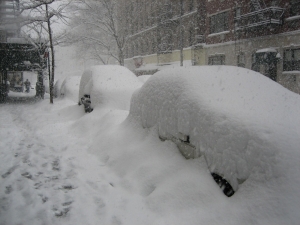
One thing no one should procrastinate about is emergency preparedness. Although living in Canada we are relatively free of hurricane’s, earthquakes and floods, we do have our share of snowstorms, ice storms and have experienced tornadoes in the past couple of years that resulted in devastation and families stranded.
With winter almost upon us, there’s no time better than the present to get your home emergency kits ready for whatever hits. I’m sure many of you haven’t even put one together but it’s relatively easy to do.
First you’ll need to get yourselves a couple of easy to carry, air tight bins in which to store the emergency items needed. It’s also a good idea to have a large knapsack or duffel bag kept with your bins in which you keep a sleeping bags, coat, pants, long sleeve shirt, hat, mittens, scarves and blanket (one per person).
FEMA has put together a great list that should be in your emergency kit and I have replicated it below for your reference:
1. Three day supply of non-perishable food and water. One gallon of water per person per day is required.
2. Portable battery-powered radio or television with extra batteries.
3. First aid kit and a first aid manual.
4. Hygiene and sanitation items such as moist toilettes and toilet paper.
5. Matches in a water proof container.
6. Extra clothing.
7. Whistle.
8. Small kitchen accessories and utensils, including a can opener.
9. Copies of identification and credit cards.
10. Cash and coins.
11. Prescriptions if needed.
12. Eyeglasses, contact lens and hearing aids.
13. Infant items such as diapers, formula and bottles.
14. Non-perishable food items your family typically eats such as cans of tuna, peanut butter, protein bars, canned beans, canned soup and pasta.
Another tip to keep your emergency kit well-organized is to label all food containers with the date you stored them and every January revisit and rethink your kit in case your unique needs have changed. It may never happen to you but if an emergency does hit, at least you’ll be prepared. Don’t let the word “later” take over your life. Take action now, avoid procrastination and get your kit organized.
 905-642-5669

 ClutterBGone Inc. Featured by BACD — and Varsha Singh Recognized for International Women’s Day!March 24, 2026 - 2:35 pm
 How Clutter Can Affect Your Relationships: A Closer LookAugust 31, 2023 - 2:48 pm
 905-642-5669


Organizing Tips For Travelling
in Home Organizing, MiscI have a tendency to panic when getting ready for a trip. It’s not the process of getting organized for the trip that gets me feeling panicky, it’s the actual trip itself, getting from one location to another without losing anything along the way. My husband finds humor in this but it is an issue I have in not fully trusting that my luggage and belongings won’t disappear somewhere along the way, never to be found again. It doesn’t help matters that I know quite a few people that this has happened to.
Getting ready for a vacation I recently faced this panic again so I decided that through organizing for the trip I could actually avoid the panic for the most part.
I think I’m pretty good when it comes to organizing my clothes and everything I need to bring for me and my husband. I make sure I have things that will match but never want to carry an excessive amount on vacations. Many things can do double duty.
My major panic, believe it or not, is around my skincare items, prescriptions and bathing suits. Certain things I can replace if they get lost when in another country. However some things are irreplaceable to me and would cause me undue grief, frustration and fear if I was without them.
Skincare for example is major as I have sensitive skin and the products I use are not easily found and are fairly expensive in my mind. Prescriptions are of course vital when on vacation so no one would want to go without those and who knows how difficult it would be to replace. Going to a doctor in a foreign country and explaining why I need a replacement for lost medication could prove to be futile. Lastly, when it comes to bathing suits, and I know most women would agree, it’s one of the most difficult shopping excursions we women make. So to lose them en route and have to subsequently replace them during the trip could prove to be excruciatingly painful and frustrating as most women find it very difficult to find a bathing suit in which they feel comfortable and that is in fact flattering.
So what’s the solution to organizing for the trip keeping these 3 issues in mind? It’s as simple as packing all those items in your carry-on bag so in case you do lose your suitcase en route, you can at least enjoy the vacation with the few essentials that are in your carry-on. Keeping in mind the liquid volume limitations, I ensure I have my essentials in my carry-on and if the original size of the product is too large for the restriction for carry-ons I simply purchase a few small size travel containers and put the product in those instead.
So if you see me in the airport and I have a smile on my face (which I usually do by the way), it will be because I feel relaxed and calm knowing that, if anything were to happen to my luggage en route, when I do arrive at my destination I will be able to jump into my bathing suit, use my skin care, take any prescriptions I need to stay healthy and also be able to lounge around enjoying my vacation until either my luggage arrives or I feel energized enough to shop, whichever comes first.
Process Of Organizing For Your Pet
in Home Organizing, MiscHave you ever thought that maybe you need to sort through and organize all the toys and “stuff” that you have in your home for your pet?
On December 6th (St. Nicolas Day, Sinterklaas for us Dutchies) I realized this was my reality. Now that I have Tess, a little 10 pound Maltipoo, I find myself buying little Sinterklaas gifts for her. I rarely buy Tess any toys that contain stuffing because within 5 minutes of having one she will literally tear a hole in it and pull out all the stuffing she can reach with her snout. She can even tear into those “tough” toys that are supposedly indestructible.
This year I decided to buy her a “stuffy” so she could have fun tearing it open and making a mess. She did just that and of course, put a smile on my face at the same time. Pets are great like that. After she was all done and I was picking up all the while fluffy stuff she had so insistently pulled out, I began putting her toys back in her toy basket that I keep in the living room. In doing so I realized that there were quite a few things in there that she either rarely played with, had completely destroyed or that she never even touched. It made me realize that even with our pets we need to organize their stuff because they can’t do it themselves.
Starting the process of organizing I proceeded to empty the entire basket and displayed all of the items on the floor, sorting everything into categories, balls with balls, stuffy type things with like items, etc. It’s also important to remember to inspect your pet’s toys on a regular basis because the squeakers in toys can come loose and become a choking hazard for your pet as well as other items that may be inside of toys that your pet chews. Therefore this periodic de-cluttering of your pet’s toys will help to avoid any hazards to their health.
While you’re at it, it’s also good practice to take a look at the pet care items you have in your home, sorting those and tossing anything that is broken or not used or tolerated by your pet. I suggest you keep your pet care items, such as shampoos, conditioners, brushes, etc. in the place where they are actually used by you and keep them all contained in one bin or basket that fits all the items. Pet’s toys should also be contained in a bin or basket that matches your décor.
Don’t forget to also check your pet’s coats and leashes. I found an old dog coat I had bought Tess when she was 6 months old. The coat was in great condition but certainly didn’t fit her any longer. That went straight to the vet for donation as I knew it would come in handy there.
Take care of your pets because you know they take care of you and put a smile on your face every day!
Downsize And Simplify Your Life
in Downsizing, Moving SeniorsDownsizing is creating in a smaller space and can often be a daunting process. For seniors it can be even more overwhelming, especially when you have lived in a home for several decades collecting numerous possessions along the way.
Every year, thousands of older adults and seniors leave their larger homes for smaller, more manageable spaces.
Several reasons exist for seniors who want or need to downsize.
According to some of my clients it’s because they no longer want the burden of home ownership. For others the kitchen is too difficult in which to manoeuvre and retrieve items, or the home is too far from grocery stores and banks. Often times the hallways in older homes are too narrow and there are too many stairs. Housekeeping is difficult to keep up with and for many physical and health issues make caring for a home too difficult.
If you are considering taking the plunge to a more simplified way of life there are a few things you can do to get started before you move.
First, look at the top shelves in your home. The ones you can’t reach. If you have items on any tops shelves in your current home it’s because you either don’t need them or can’t reach them. Whichever the case, it’s likely a safe bet that you can let those items go.
Secondly, don’t hold yourself hostage to being a keeper of all the heirlooms from your family. I’ve heard from many clients that this is their primary reason for not letting go of items they no longer have room for. Take a photo of the item and then send it to other family members to see if anyone would be interested in taking the item. If not, you know that it is safe to donate to charity or send it along to a consignment store without causing family despair.
Thirdly, remember you can still keep the memories without keeping every possession that goes with that memory. Consider taking swatches of cloth from special, treasured items and a few tokens of memorabilia and creating a memory box rather than keeping every single item.
Consider how much you can gain from downsizing to a smaller home. Think of it as an opportunity to start a more secure and socially active way life so you can do more, have more free space and room to move around without barriers to safety.
Lastly remember that you are still you without all your stuff. We are only a caretaker of our stuff. When we pass on, someone else becomes that caretaker. It’s better to downsize now when you are physically able and can still make the decisions on what to keep and what to let go of than have to do it when the choice is taken away from you. Ultimately, downsizing is the process of sorting through all kinds of stuff to determine what is most meaningful and important.
To downsize is to simplify, lighten up and get organized. Remember, the important things in life are not things. It’s the people who are important. Just keep the memories, not the stuff.
Tips On How To Organize Your Fridge
in Home OrganizingWith the holidays coming up fast and furious it’s a great time to get your fridge cleaned out and organized to make room for all those extra holiday foods that will likely be coming your way. Getting your fridge organized will also be more efficient, saving you time and money!
My husband and I decided to tackle our fridge a couple of weeks ago. I make sure I do this at least once a year although I do recommend a minimum twice yearly, especially if you have a large family.
Start by removing every single item in your refrigerator. Everything! As you’re doing that, place items on your kitchen counter or table into categories. For instance, you’ll likely have categories for drinks, yogurts, salad dressings, condiments, sauces, spreads, meats, etc. The key is to put like items with like items.
The next thing you need to do is check the expiry dates on every item. Any item that is past the expiry date should be tossed with bottles and plastics emptied and placed in your recycling bins. For any items you find questionable, check out this website at stilltasty.com where you will find information on whether foods can be kept. If you find that there is no expiry date on a product you can go to the manufacturer’s website. In certain instances you will be able to type in the bar code of the product and the site will be able to tell you the date of expiry.
Take a good look at the items you have left. Toss anything you don’t use, or have tried and don’t like. Once you have purged all those items past prime and tossed anything you no longer use, it’s time to clean the fridge. I like to use warm soapy water or water and vinegar. Wipe down all the walls and horizontal surfaces to clean up any messes, spills, leaks and caked on yucky stuff. Pull out and remove any drawers and in-the-door bins that you can wash up in your sink. Pay special attention to the surfaces under your drawers which are usually a prime collection zone for spills as well as the horizontal seals which tend to collect crumbs.
Once you have all surfaces clean and sparkling it’s time to place items back into your fridge in an organized fashion, creating zones in your refrigerator for each category of food item. Group your category items together and find spaces that they will fit in. For example, group sauces together, or keep cheeses all in one place.
Contain categories of small items, such as sandwich meats, into a clear plastic bin for easy retrieval. A Lazy Susan is also another great item for accessing a wide variety of items in a small area, making them perfect for the fridge. Shelf liners can be utilized, especially if spills are a constant in your household. There are also a host of stackable bins you can purchase specifically for the fridge to help you keep your categories contained and to maximize the vertical space in your fridge.
You’ll feel much better once your fridge is cleaned out, organized and ready for the holidays. Enjoy!
Getting Your Emergency Kit Organized
in Home Organizing, MiscOne thing no one should procrastinate about is emergency preparedness. Although living in Canada we are relatively free of hurricane’s, earthquakes and floods, we do have our share of snowstorms, ice storms and have experienced tornadoes in the past couple of years that resulted in devastation and families stranded.
With winter almost upon us, there’s no time better than the present to get your home emergency kits ready for whatever hits. I’m sure many of you haven’t even put one together but it’s relatively easy to do.
First you’ll need to get yourselves a couple of easy to carry, air tight bins in which to store the emergency items needed. It’s also a good idea to have a large knapsack or duffel bag kept with your bins in which you keep a sleeping bags, coat, pants, long sleeve shirt, hat, mittens, scarves and blanket (one per person).
FEMA has put together a great list that should be in your emergency kit and I have replicated it below for your reference:
1. Three day supply of non-perishable food and water. One gallon of water per person per day is required.
2. Portable battery-powered radio or television with extra batteries.
3. First aid kit and a first aid manual.
4. Hygiene and sanitation items such as moist toilettes and toilet paper.
5. Matches in a water proof container.
6. Extra clothing.
7. Whistle.
8. Small kitchen accessories and utensils, including a can opener.
9. Copies of identification and credit cards.
10. Cash and coins.
11. Prescriptions if needed.
12. Eyeglasses, contact lens and hearing aids.
13. Infant items such as diapers, formula and bottles.
14. Non-perishable food items your family typically eats such as cans of tuna, peanut butter, protein bars, canned beans, canned soup and pasta.
Another tip to keep your emergency kit well-organized is to label all food containers with the date you stored them and every January revisit and rethink your kit in case your unique needs have changed. It may never happen to you but if an emergency does hit, at least you’ll be prepared. Don’t let the word “later” take over your life. Take action now, avoid procrastination and get your kit organized.
Tips To Organize Your Laundry Room
in Home OrganizingMost people dislike doing laundry and tell me that their laundry room is one of the hardest places to keep organized in their home. Let’s face it, not only is it a generally unpleasant chore, but it’s also performed in a space which is usually low on our list of priorities in terms of decorating.
In our previous home the laundry room was located in our dreary, unfinished, cold and damp basement requiring me to lug laundry baskets up and down the stairs. When you have a family of four there’s usually a lot of laundry to do. In our current home our laundry room is situated on the top floor which I absolutely love. It makes you wonder why home builders didn’t think of this before!
If your laundry room is not there yet (mine certainly is not) or is not located on the main or top floor of your home, there are several things you can do to simplify and organize your laundry and make this chore more pleasant and efficient. Here are a few tips to get you started:
Is Clutter Your Crutch?
in Home OrganizingMany people see their possessions as something special and valuable even though that meaning is not apparent to others. It’s this emotional quality that gives our stuff so much power in our lives and also makes it so tough to live clutter free.
Challenge yourself to make a positive change in your life. Photo albums, trophies, school memorabilia and other items with powerful memories (either positive or negative) can be reviewed. As you sort through these items ask yourself whether it evokes good or bad feelings. If the feeling is a negative one, give yourself permission to let it go. If clutter is a real problem for you consider paring down those items that evoke a good feeling as well. It’s okay to keep a few items that represent a happy time in your life but it’s a matter of being selective. Learn to live in the present. You don’t need inanimate objects to represent memories and good times. Live the good times. Live today.
Does Clutter Equal Stress?
in Home OrganizingHow many times have you tried to de-clutter and get organized only to feel tremendous stress and frustration because you just don’t know what to do with a particular object? It could be you had planned on tidying up a particular space in your home only to find that there are a lot of objects for which there is no home. You pick it up, consider it, and then put it back down because you just don’t know where to put it. You’re afraid that if you put it away somewhere, you might not remember where it is the next time you need it. So, you simply leave it there and move on to the next item. This process gets repeated over and over again, expending time and energy and yet no progress is made. Frustrating? Stressful? You bet!
To overcome this obstacle think in terms of categories. We all have categories of items in our homes or offices. We may have a category for tools, toys, office supplies, etc. Think about the item you have in your hand and how it is used and then place it with that particular category of items. If there is no category you will need to create one. As long as items have homes (a place to live) then you’ll know where you need to go to retrieve it and where to return it. When you think “clutter” think “categories”.
Quick Tips For Preparing Your Home For Sale
in DownsizingSelling your home can be a very stressful experience. So why not make it as simple and easy as possible to get your home ready and sold quickly. This requires you to look at your home with fresh eyes. But with the following tips to get your home ready for sale you will be well on your way to a quick and stress free home sale experience.
When it comes to preparing your home for sale, less is more. You want to make the space feel bigger. Any who knows? After you follow through on these tips you may decide you like the simplified, streamlined and clutter free look and change your mind on selling your home! I had a client who did just that after we de-cluttered and organized his cottage. He liked what we did so much that he decided not to sell after all!
Sometimes you just need a change of perspective and see how wonderful living clutter free can be.
The Valuation Of Possessions …
in Downsizing, Estate OrganizingThere is a difference between the value of an object and how it actually fits in your life. One of the challenges that I face when working with my clients is their idea of what is valuable. This usually occurs when we are paring down possessions and a client is hesitant to let something go because of what he or she paid for it and what it was worth in the past. For instance, I have a client who is holding onto a very old dining room set she and her ex-husband acquired over 25 years ago. Their marriage ended 12 years ago and she has since moved to a much smaller home in which this dining room set is much too large for the dining room itself. In fact with the set in the room there is actually no room to move around so the room and the set are effectively unusable. In addition, she identified that she dislikes entertaining and having people over for dinner so to have a dining room set does not even fit into this client’s life.
The space could be better used in a way that reflects her lifestyle. Yet she does not wish to let go of this set because she paid over $20,000.00 for it in 1988 and it is still in very good condition. If you ever find yourself saying “hey, I paid a lot of money for that” you are evaluating the object based on its past value, not the present value. If the item is of no use to you now and not important to your present life, the fact that you paid a lot for it doesn’t change the fact that it is taking up valuable real estate in your home and actually costing you more in terms of time, energy and space to store, clean and maintain. Why do this when you get no benefit from it when you could actually sell or donate the item to someone who could benefit from it.
What are you holding onto that is no longer a benefit to you?