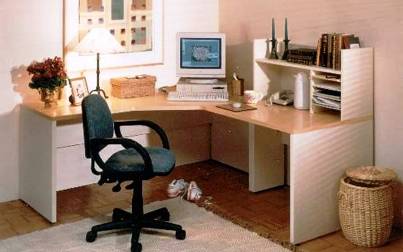
 We all dream of living a clutter-free existence. When it comes to our home office, we dream of papers neatly filed, office supplies tucked in their little organizing compartments and being able to see every square inch of our desk.
Yeah right.
While that’s the ideal, the reality is that most of us make a mess throughout the day – sometimes cleaning it up at the end of the day, other times leaving it for a magic fairy to take care of the mess while we sleep.
The truth is, a chaotic desk isn’t always a personal failing—it’s often a sign that the space itself isn’t pulling its weight. Old-school offices were built with purpose: drawers where drawers belonged, surfaces that encouraged order, and layouts that made sense before “winging it” became a design philosophy. That’s where an office fit specialist earns their keep, stepping in with a sharp eye and a practical mindset to turn daily disorder into something far more manageable.
With the right planning and a thoughtful office fit out essex project, clutter stops being a constant battle and starts becoming an occasional skirmish you can actually win. Smart storage, sensible layouts, and furniture that knows its job can make even the busiest workday feel a little more civilized. No magic fairy required—just a well-fitted office that respects how people have always worked best.
It’s a new year, why not start with a clean slate and make it less cluttered year than the last. While organizing your home office might seem daunting after 12 months of neglect, there are some quick and easy things you can do to get you started.
Start with a clean slate
If you are like most people, there are likely several piles of paper on your desk, perhaps so many that you can’t even see the desk. The first thing you should do is clear off the clutter from your desk. Take off all paper, desk supplies, etc., leaving only your computer and the phone on the desk. Better yet, go paperless by using a cloud service like Google Drive or Evernote.
Get (or start using) a filing cabinet
If you don’t have a filing cabinet, invest in one with several drawers so you have plenty of room and won’t have to cram papers in there. Use labels to identify each drawer, such as one for personal documents, one for finances and one for work documents.
Label file folders for your cabinet
Purchase some hanging file folders and use a label maker to identify the documents that are going to belong in said folder (it can also help to get different colored folders for certain drawers). By properly labeling each folder you know where to quickly store and access any document in your house when you need it.
Throw out the clutter
As you sort through the papers that were on your desk and begin to allocate them into their new home in your filing cabinet, be sure to toss out things that you don’t need. Junk mail, old newspapers, outdated statements, etc. However, remember that you should shred any personal or professional documents before throwing them out. If you feel you may need any old documents in the future, make a digital copy of them with a service like Evernote before shredding them.
Get a desktop calendar
While some people prefer to use their phone or tablet for their daily tracking, having a desktop calendar can also be a great help. Remembering important dates and deadlines that come up can be easy when you have a great big reminder on the desk in front of you. It’s also a great way to get rid of some of those reminder post-it notes that can gather around your PC or laptop.
Figure out the cable situation
A massive jumble of cables in your home office isn’t just an eye-sore, it can also be a fire hazard. Be sure to remove electronic equipment when you are done using it, such as a radio, and for those cables that you need, use a zip tie to keep them neatly rolled together or grouped together.
Get a desk drawer organizer
By purchasing a container to keep your paperclips, staples, post-its and other desk supplies organized it makes finding them a cinch. If you don’t really want to splurge, you can always use ice cube trays to house those smaller items that are all over your desk.
Use a mail organizer
Many of us are guilty of getting mail and simply throwing it on our desk to cause further clutter. This year, use a desktop mail organizer to have a designated place for incoming mail, outgoing mail and even one for things requiring your attention.
Create a space in your office for personal items
We all have places in our office where we keep pictures of our kids, favorite pet or even just an inspirational message, which is great. However, you shouldn’t take up valuable workspace with these items. Instead choose a place in your office, such as a shelf or above your filing cabinet, where you can house these items safely out of your workspace.
Get your computer organized
While you are starting off the New Year fresh, don’t forget to get your computer organized as well. This means creating proper folders for documents, pictures, home videos and a separate area for all your work items. Be sure to back up all your files to a jump drive in case your computer crashes. A service like Dropbox will automatically backup your files to the cloud for safe keeping.
And while you’re tidying up the digital clutter, it’s worth thinking about the hardware that keeps everything humming along. A sudden outage can undo all that careful organizing faster than you can say “where’d my desktop go?”
That’s why having a reliable backup power setup — often anchored by something like an apc rack pdu 9000 switched unit — gives your system a fighting chance when the lights flicker or the grid decides to take a nap. It’s the quiet guardian that keeps your machine stable long enough to save your work, shut things down properly, or simply avoid a mini heart attack.
Starting the year with order isn’t just about neat folders; it’s about protecting the tools you rely on every day, the same way folks used to keep a sturdy lock on the family desk drawer. A little preparation now saves a heap of frustration later.
Ok, so it looks like a lot of work, but if you dedicate a few hours this weekend you’ll be surprised to see it really doesn’t take very long. Rome wasn’t built in a day, same with organizing your office, but it’s a good start!
Have questions about organizing your home office? Feel free to contact me here.
 905-642-5669

 ClutterBGone Inc. Featured by BACD — and Varsha Singh Recognized for International Women’s Day!March 24, 2026 - 2:35 pm
 How Clutter Can Affect Your Relationships: A Closer LookAugust 31, 2023 - 2:48 pm
 905-642-5669


8 Organization Ideas for Making the Most of a Small Home Office Space
in Home OfficeHere in Toronto many homes don’t necessarily have a large space for an office (or don’t have a designated office space at all!). But not to worry,. With these organization ideas you can make the most of a tiny or non-existent space for a great work environment at home:
1. When you can’t devote an entire room in your home to a home office, you can save space by opting to go desk-less. Instead, you can use sturdy shelves (Ikea has some great customizable and affordable options) to store your computer and other office necessities.
2. Integrate your work area into another room― for example, a double-duty guest bedroom and home office combination ―by sticking to a consistent color scheme.
3. When space is tight, be on the lookout for multi-functional pieces. For example, you can find a desk with a pop-up mirror and use it as a vanity as well. Another great option is an ottoman with a top that lifts to allow for extra storage and additional seating.
4. If you have no choice but to have your home office in a shared room in your home, a folding screen is a great option to create some privacy. There are lots of sophisticated and trendy options on the market. You may opt for one that has a blackboard finish or even a cork board that can act as an inspiration board.
5. If your office doesn’t have a lot of horizontal space to work with and can’t spread out, why not go up? There are lots of ways to make great use of vertical wall space. Consider building shelves from the floor to the ceiling to allow for more storage space. You could also place shelves slightly above your desk that can hold your printer, books, and other office supplies. This way, everything you need will be within easy reach while sitting at the desk, without minimizing your prized work area.
6. If you have some wasted space underneath your desk, you can use it to store boxes or containers filled with office supplies, documents, bills, and etc. But be careful not to overdo it here – in other words, don’t put something somewhere because “it fits.” Consider when and where you would want to look for those items and organize your space accordingly.
7. Don’t let the space behind your office door go to waste. To optimize the space, you can hang a shoe organizer on the door to store office supplies.
8. Minimize paperwork and unnecessary clutter by storing as much as you can on your computer. This will give you more space to work with and keep your space looking tidy with minimal upkeep requirements.
Thanks for reading – I hope you liked these ideas and perhaps they sparked some new ideas of your own. Remember, the end goal here is to create an efficient and functional space that’s organized in a straightforward and simple way. Let me know if you have any comments or questions in the space below.
5 Ideas for Downsizing with Style
in MiscWhatever the reason, there are many ways that I help my clients downsize with style and ease. A move from a family home to a condominium can be the most challenging of all and requires a great deal of space planning and expertise if you want the experience to be a pleasant one.
Do you still love to garden and wonder how you will incorporate that into condominium living? Do you find you need office space but don’t know how to make that happen in your new space?
Whether you’re telescoping a lifetime’s accumulation of belongings from a larger home to a jewel box, a little creativity can go a long way.
Pallet box for gardening
Tower Garden
Counter Dining
Multifunctional pieces are key
Flip down change table
As with many things in life, when it comes to moving and downsizing, the more you plan and the better prepared you are, the easier it will be. These 5 ideas will give you a good start and if you need some help along the way, contact me directly at lindav@clutterbgone.ca
Never Get Caught in a Disorganized Mess Again – Five Easy Tips
in Home OrganizingYikes! Your mother-in-law just called to announce that she’s dropping by in an hour and your house is a disorganized mess! Time to clean up quick.
Does this sound familiar? Don’t worry, it happens to the best of us. But it’s totally possible to keep your house tidy and organized at all times. Keep reading to learn how you can stay ahead of the curve and never get caught in a disorganized mess again.
1. Deal with what comes through the door right away
When you come home after a day of shopping, do you put your purchases away right away or leave them around the house? If it’s the former, keep it up! If not, start to make that a habit. Hang up new clothes right away, find a storage place for any new kitchen gadgets, and try out any new home accessories right away. If it doesn’t work the way you thought it would, return the item as soon as possible and don’t let shopping bags clutter up your space.
2. Clean up the kitchen after every meal
The kitchen is the place in the house that can be the most overwhelming to tidy up, which makes it really tempting to put off. But just think. If you take 10 minutes to put away dishes in the dishwasher and wash your pots and pans right after a meal, it is much more manageable than letting things pile up. The same applies to taking out the trash as well. Why not place it by the front door to grab in the morning – or, better yet, dispose of it that night so it’s over and done with?
3. Get into the habit of tidying up your bedroom before bed
Before you settle into bed, take a few minutes to pick up any dirty clothing or other items you forgot to put away. I guarantee that you’ll feel much better going to sleep and waking up in a tidy and organized room.
4. Get Some Help
While this tip may seem quite obvious, it’s surprising how many people try to tackle home organization on their own. Getting (and keeping) things organized is a lot easier if you work as a team. Why not assign every family member a section or room of the house that’s his or her responsibility to keep tidy? Or you can divide up responsibilities by chore (someone’s in charge of washing the dishes, someone’s in change of vacuuming, etc.) Determine what works best for you and your family (lots of times this will have to be through trial and error) and stick to it.
5. Make it enjoyable
Of course cleaning and organizing isn’t the most exciting thing in the world for most people, but there are lots of ways that you can make it more enjoyable for yourself. Put on some good music, make it a workout, or chat with a friend on the phone while you do it. Or why not listen to a podcast or an audio book while you’re at it?
I hope these tips help you out and you never find yourself caught in a disorganized mess rushing to clean up for guests again. I’d love to hear for you – let me know in the comments below if you have any go-to time saving organization tips.
8 Creative Small Space Solutions
in MiscLiving more simply is one reason you may have decided to downsize your home and your life. Perhaps you have become an empty-nester after your children have flown the coop, or perhaps you are exchanging one large home for two smaller ones. You may even be relocating to start that dream job to retiring and re-allocating your disposable income. With a few creative and innovative ideas your smaller space can be one of the best moves you ever make. Creative organization is in fact the key to small home living.
Here are 8 space saving ideas to show you how downsizing can be a creative experience.
Stairway creativity
Pallet boxes for your garden?
Find yourself a wooden pallet box, staple some black garden cloth to the bottom and fill it with dirt and your favorite plants. You have a wonderful mini garden that easy to maintain and will grow to your heart’s delight.
Decorative compost pail does the trick
Use the inside of a closet door
A big problem in a smaller space is where to store your wrapping paper and all the accessories that go along with gift wrapping.
Find a small corner for your desk
Hidden storage spaces
Lo oking for a space to hide away those cables or other items you wish to conceal from the eyes?
This great idea using the spines of books and a simple box is a great way to store away and hide items from sight without going to a lot of expense.
Stairs risers equal more storage
Creative under stair storage
Wake up your smaller space with these creative organizing solutions and you will be well on your way in your goal to downsize and live simply.
7 Benefits To Downsized Living
in MiscSpend less time cleaning
In a smaller home you will be spending less time and energy cleaning. Imagine having less floor space to clean, less furniture to vacuum, less items to dust and less carpets to clean. For many, that is reason enough!
Less repairs and maintenance
A smaller home is also much easier to manage and maintain. Less repairs and maintenance equals less money spent and more time and energy for you to spend doing the things in life you truly enjoy.
More freed up funds for traveling
All that money you are saving on insurance, heating, cooling, taxes and electricity can be used to free up your lifestyle for traveling. Don’t forget the money you save on decorating as well. Plus, a smaller home is less of a hassle to leave when you travel than a larger one. Especially if you have downsized to a condominium or apartment.
A new way of living
Many of my clients make the decision to downsize with the added benefit of opening up a new chapter in their lives. It represents less upkeep, a new way of living, more time for socialization and trying new things.
Lose the mental baggage
Let’s not forget the psychological benefits of downsizing. You become mentally free as the more we own, the more stuff owns us and the more mental energy is taken hostage by our stuff. Downsize and you free up your mind.
Environmentally friendly
If you would describe yourself as environmentally friendly, a smaller home uses less resources to build and maintain which benefits everyone.
Less debt
If the thought of debt keeps you up at night, a paired down lifestyle can help some people free themselves of debt. There will be less temptation to accumulate, overspend and over buy. Your downsized space will keep those shopping sprees curbed. If you are trying to save money and keep your credit in good shape consider downsizing your home – your future will thank you for it.
Don’t be afraid to downsize. Embrace this change with open arms and start a new way of living. You will not regret it! If you have questions on how to make this change easier and organized, contact me and I will lead the way for you.
To Keep or Not to Keep? Decisions To Make When Downsizing
in Downsizing, Moving SeniorsIn this post we’ll look at some tips for helping your parents determine which items will work in their new place. Here are five important questions to ask when deciding:
1) Does it fit into the new space?
When it comes to furniture and other belongings that take up a significant amount of space, be sure to measure, measure, measure. Sometimes your eyes can deceive you, take the time to measure the new space before bringing along your furniture. If it doesn’t fit, that automatically eliminates the option of keeping the item. Now you can choose between selling, donating, or discarding the item.
2) Is it appropriate for the new lifestyle?
Sure, an item might fit, but another important consideration is whether the item in question “appropriate” for the new space your parents are moving into. Moving to a new location is a good reason to start fresh with some new and updated furniture and accessories. Larger items like a formal dining room table, may have no place in the new home.
3) How often will it be used?
How often an item is used is another big factor in deciding whether to keep it or not. Ask your parents: “when was the last time you used this?” If it hasn’t been touched in over a year, that’s a sign that the item will probably not be missed and should go.
Of course, there are some exceptions– for example, maybe the item in question is a family heirloom that’s more of a showpiece rather than something that can be used on a daily basis. In that case, if the new place can accommodate it, there is no reason for your parents not to keep it. Another option is to store the item or collection at another family member’s home rather than selling or donating.
4) Is it useful today?
When deciding if you should spend the time and effort to sell something, it’s important to gauge whether the item is useful today. Trying to sell a low value item can create more headaches than simply giving it away. Check Kijiji or Ebay for similar items to get an idea on selling price and if it’s worth the effort.
5) Is it in good condition?
Evaluating the condition of an item is especially important when it comes to sorting through clothing and shoes. Downsizing to a new home is the ideal time to also help your aging parents downsize and de-clutter their wardrobes. Some older items may not be worth the move and can be put to better use by donating it. It’s also a great reason to treat your parents to a little shopping trip to celebrate the move!
No doubt, the downsizing process can be overwhelming. The most important thing to take away here is to be understanding that your parents may not want to get rid of certain sentimental things, but at the same time be realistic to ensure that they are not bringing unnecessary clutter to their new place.
If you have any questions about downsizing to a smaller space, feel free to contact me here or leave a comment below.
Organizing Your Family’s Home Office Or Command Centre
in MiscSmaller spaces in new homes have created a big design challenge of how to get the benefits of a home office into the footprint of a smaller space. But with a little creativity, even without four walls of its own, we can still carve out space for a home office or command centre for the busy mom or dad.
It simply means designing a multifunctional space. What better place than the kitchen for this multi-tasking challenge. Not only is the kitchen the ground space for your culinary hub, party central, and family headquarters, but now it can work as your home office too.
Begin with your message board
First and foremost you need a create a command centre message board. This can not only be a clever design element to your space but will also act as a place to post schedules, reminders, notices and even artwork. This is one example of how a command centre can be presented as a creative design element in your home.
Update the information frequently so everyone gets into the habit of checking it regularly. If you make it interesting and appealing your family will be more inclined to check it out. Clever components of ribbon, colourful tacks and a section of chalkboard will make an orderly arrangement for jotting notes and posting.
You can purchase several smaller framed boards as in this image, or you can buy one larger board and use ribbon to divide the board into quadrants, one for each family member. And don’t forget to attach a mail sorter for stamps, correspondence and writing instruments.
Your kitchen island
Kitchen islands are one of the easiest and most versatile places to tuck a kitchen office. Carve out a drawer or shelving unit to contain your command centre essentials, slide up a streamlined stool and you have a convenient space to pay your office, store your supplies and write notes.
A little nook
If you can’t spare the space on your island, almost every kitchen has a little nook somewhere in or close to the kitchen that doesn’t have a purpose.
Locate the dead zone
What about that dead zone where the kitchen ends and the family room begins? It’s also the perfect place to incorporate a home office or command centre. This area’s often within arm’s reach of the kitchen, but removed enough so that the office will be safely out of the way.
Keep these ideas in mind as you look for space to carve out your busy families’ command centre or home office and you’ll find there is always an easy solution at hand.
If you need some help with your project, contact me for creative clutter control!
Creating Your Office Filing System
in MiscPaper does not file itself. There is no magical paper fairy that comes into your office at night to file everything in its appropriate place. Nor is there an invisible helper that creates and actually sets up a filing system for you if you don’t have one.
Piles of paper are distracting. They are a constant reminder of work to be done in some manner. Paper piles decrease your efficiency and undermine your ability to do what you need to do.
However, with a little bit of time and patience and a helpful dose of office know how, that pile of paper that seems to get higher and higher in your office can in fact be conquered. That doesn’t mean moving the pile from one horizontal surface to another either.
So how do you begin to set up a filing system and office work space that functions well?
The basic structural elements
The first step is to invest in a desk that, at the very least, has a drawer so that you have a place to store pens, pencils, fasteners and other office necessities. I personally am not a fan of roll top desks or large armoires as items are then easily lost. I prefer a functional desk space that is streamlined and clutter free. A comfortable chair is also a must have, as well as a filing cabinet. And don’t forget the importance of proper lighting.
Desk accessories
Next is to have a place for your papers to go as soon as they arrive into your office. This could be an “in box” where you place your mail until you have set a time to open and deal with it.
You also need to create an “action” centre on your desk. The type of action depends largely on the work that you do in your office. However a good rule of thumb is to have action folders labelled “File”, “Pay”, “Read”, “Add to Contacts”, “Contact” etc. These action folders should be contained in a vertical desk top file organizer within easy reach and within eye contact as a visual clue to the actions that need to be completed. I suggest avoiding any general action files that say “critical” or “urgent”.
File folders for paper containment
Next comes the filing system. No office is complete without one, whether it be electronic or paper based. For paper based systems, some people work well with colour coded files. The benefits of colour coding include:
You may perhaps keep all your financial files, such as banking and investment papers, in green folders; your critical records such as employment, education, insurance and health in blue files; your reference files, such as school information, special articles of interest, bus schedules, travel ideas in yellow files and perhaps all your utility bills in orange files. Whatever colour you choose should reflect how you think about a particular category of files.
Basic office supplies
No office is complete without some basic supplies. These would include pens, pencils, highlighters or markers, stapler, staples, paper clips, note paper, tape, rubber bands and binder clips. You’re also going to need printer paper.
This is not a comprehensive list of all the things that one might have in an office but can certainly be used as a guideline to begin your office set up. Think about what actually happens in your office and the activities that take place there. Once you determine the tasks that actually belong in your office you will be able to create a system that works for you.
If you need further advice or information on how to make your office work for you, contact me and I would be pleased to help.
10 Quick Things You Can Do To Organize Your Home Office This Weekend
in Home OfficeYeah right.
While that’s the ideal, the reality is that most of us make a mess throughout the day – sometimes cleaning it up at the end of the day, other times leaving it for a magic fairy to take care of the mess while we sleep.
The truth is, a chaotic desk isn’t always a personal failing—it’s often a sign that the space itself isn’t pulling its weight. Old-school offices were built with purpose: drawers where drawers belonged, surfaces that encouraged order, and layouts that made sense before “winging it” became a design philosophy. That’s where an office fit specialist earns their keep, stepping in with a sharp eye and a practical mindset to turn daily disorder into something far more manageable.
With the right planning and a thoughtful office fit out essex project, clutter stops being a constant battle and starts becoming an occasional skirmish you can actually win. Smart storage, sensible layouts, and furniture that knows its job can make even the busiest workday feel a little more civilized. No magic fairy required—just a well-fitted office that respects how people have always worked best.
It’s a new year, why not start with a clean slate and make it less cluttered year than the last. While organizing your home office might seem daunting after 12 months of neglect, there are some quick and easy things you can do to get you started.
Start with a clean slate
If you are like most people, there are likely several piles of paper on your desk, perhaps so many that you can’t even see the desk. The first thing you should do is clear off the clutter from your desk. Take off all paper, desk supplies, etc., leaving only your computer and the phone on the desk. Better yet, go paperless by using a cloud service like Google Drive or Evernote.
Get (or start using) a filing cabinet
If you don’t have a filing cabinet, invest in one with several drawers so you have plenty of room and won’t have to cram papers in there. Use labels to identify each drawer, such as one for personal documents, one for finances and one for work documents.
Label file folders for your cabinet
Purchase some hanging file folders and use a label maker to identify the documents that are going to belong in said folder (it can also help to get different colored folders for certain drawers). By properly labeling each folder you know where to quickly store and access any document in your house when you need it.
Throw out the clutter
As you sort through the papers that were on your desk and begin to allocate them into their new home in your filing cabinet, be sure to toss out things that you don’t need. Junk mail, old newspapers, outdated statements, etc. However, remember that you should shred any personal or professional documents before throwing them out. If you feel you may need any old documents in the future, make a digital copy of them with a service like Evernote before shredding them.
Get a desktop calendar
While some people prefer to use their phone or tablet for their daily tracking, having a desktop calendar can also be a great help. Remembering important dates and deadlines that come up can be easy when you have a great big reminder on the desk in front of you. It’s also a great way to get rid of some of those reminder post-it notes that can gather around your PC or laptop.
Figure out the cable situation
A massive jumble of cables in your home office isn’t just an eye-sore, it can also be a fire hazard. Be sure to remove electronic equipment when you are done using it, such as a radio, and for those cables that you need, use a zip tie to keep them neatly rolled together or grouped together.
Get a desk drawer organizer
By purchasing a container to keep your paperclips, staples, post-its and other desk supplies organized it makes finding them a cinch. If you don’t really want to splurge, you can always use ice cube trays to house those smaller items that are all over your desk.
Use a mail organizer
Many of us are guilty of getting mail and simply throwing it on our desk to cause further clutter. This year, use a desktop mail organizer to have a designated place for incoming mail, outgoing mail and even one for things requiring your attention.
Create a space in your office for personal items
We all have places in our office where we keep pictures of our kids, favorite pet or even just an inspirational message, which is great. However, you shouldn’t take up valuable workspace with these items. Instead choose a place in your office, such as a shelf or above your filing cabinet, where you can house these items safely out of your workspace.
Get your computer organized
While you are starting off the New Year fresh, don’t forget to get your computer organized as well. This means creating proper folders for documents, pictures, home videos and a separate area for all your work items. Be sure to back up all your files to a jump drive in case your computer crashes. A service like Dropbox will automatically backup your files to the cloud for safe keeping.
And while you’re tidying up the digital clutter, it’s worth thinking about the hardware that keeps everything humming along. A sudden outage can undo all that careful organizing faster than you can say “where’d my desktop go?”
That’s why having a reliable backup power setup — often anchored by something like an apc rack pdu 9000 switched unit — gives your system a fighting chance when the lights flicker or the grid decides to take a nap. It’s the quiet guardian that keeps your machine stable long enough to save your work, shut things down properly, or simply avoid a mini heart attack.
Starting the year with order isn’t just about neat folders; it’s about protecting the tools you rely on every day, the same way folks used to keep a sturdy lock on the family desk drawer. A little preparation now saves a heap of frustration later.
Ok, so it looks like a lot of work, but if you dedicate a few hours this weekend you’ll be surprised to see it really doesn’t take very long. Rome wasn’t built in a day, same with organizing your office, but it’s a good start!
Have questions about organizing your home office? Feel free to contact me here.
10 Reasons Why You May Need A Professional Organizer
in MiscWhenever I meet with clients and ask them why they called me, I get a variety of reasons for why they need assistance.
Ten reasons you may need a professional
Here are ten reasons why you may need a professional organizer in your life:
Do you need to invest thousands?
Hiring a professional organizer doesn’t necessarily mean you have to spend thousands of dollars. You can invest a small amount of a large amount, depending on your needs and what you specifically want to accomplish.
Ask yourself what is it worth to you to live a life that has less stress, frustration and chaos?
What is it worth to you to get as much out of your day as possible?
Does “organized” mean “neat and tidy”?
Having unwanted, unneeded or unused items don’t mean they’re organized. Neat and tidy is not the same as organized. If things are organized, you can find items quickly with minimal fuss when you want and need them.
Also remember that organizing is a continuous process. It’s kind of like owning a car. You don’t just have routine maintenance performed once and then never do it again. Your home is one of the biggest investments in your life. It’s worth making it one you enjoy coming home to.