Organizing Tips When Moving

Top Tips To Get Organized Once You’ve Moved

Moving into a new home can be an exciting but stressful time. Yet, it should also be seen as an excellent opportunity to examine all material possessions you own and to declutter. After all, a new home is a blank slate!

And here’s what you need to keep in mind: sometimes, organizing your new home starts while packing up the old one. Purge all those clothes you haven’t worn in years, old kitchenware, paper files, and anything you deem unnecessary for your new life from your packing boxes. Donate books to the local library, give old clothes that don’t fit to charity, or organize a garage sale for friends, family, and neighbors.

And when you have everything organized, here’s what you can do to make moving as painless as possible:

Color Code Your Boxes

Unmarked boxes are only good for guessing games. When moving, it’s paramount to know the contents of your boxes and which part of the house they correspond to. Color-coding your boxes with labels is one of the most effective ways to distinguish one from another and avoid wasting time. You can, for example, assign all boxes marked with yellow tape to the kitchen, all boxes marked with blue tape to the bathrooms, and so on. This way, once your boxes start coming off of the truck, you’ll be able to place them in the correct room straightaway.
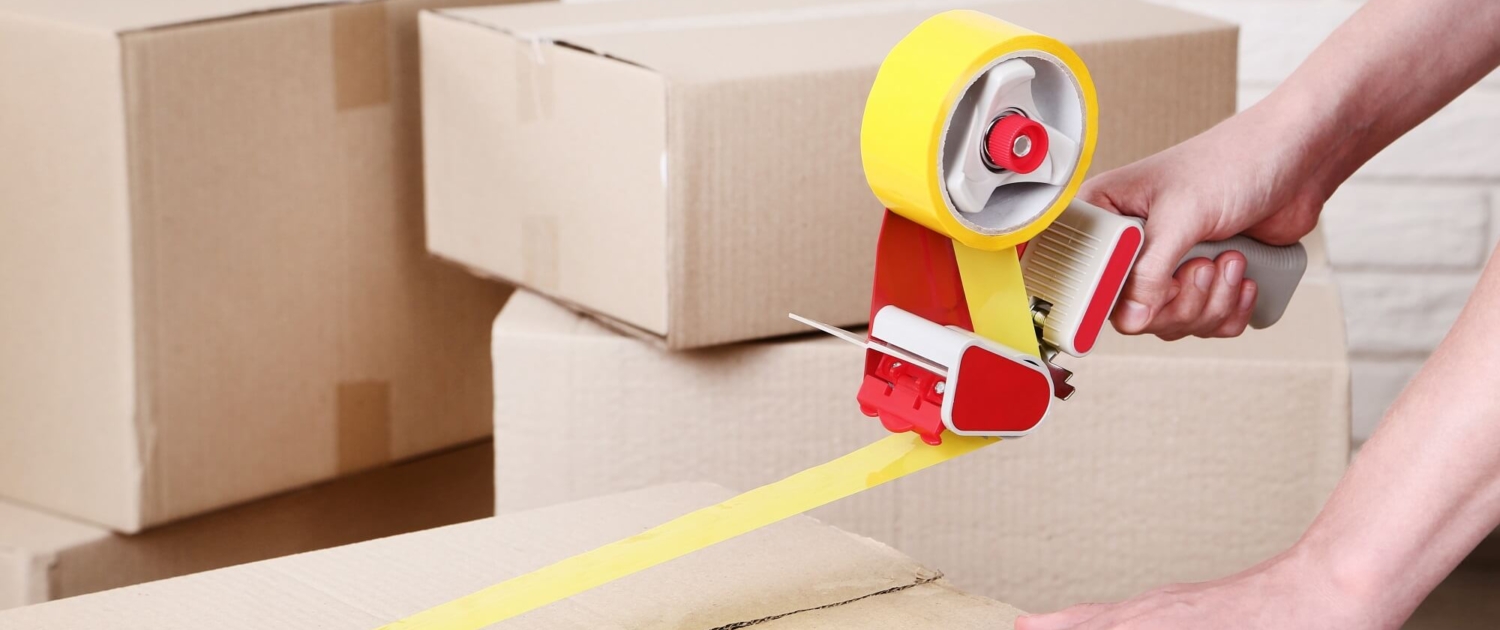
yellow moving tape

Prepare A “Moving Essential Box”

Having a box with your must-have items for the new house can make unpacking much more comfortable. An essentials box could include anything from documents to toiletries, or just things that you don’t want getting lost in a sea of boxes, like your child’s favorite toy, some kitchen utensils, or the book you’re currently reading. Set this box aside to be packed in your car, not the moving truck, so that you can make sure you have it with you as soon as you move into your new place.

Unpack Room By Room

Yes, we know it: it’s extremely stressful to see dozens of boxes scattered around the house! Our advice to avoid getting lost in the sea of cardboard boxes is to focus on organizing your unpacking room by room. A lot of moving experts agree to start with the kitchen. The sooner you get the kitchen unpacked, the quicker you’ll be able to cook at home and save money on eating out or ordering take-out food. The kitchen is also the foundational building block for your home, which is why it makes sense to unpack it first.

Decorate Your House Later

As you unpack, you’ll start finding decor items with the rest of your things. This will make you feel the urge to put them around the house to see how it looks. Resist the impulse and be patient. Set those items aside and keep unpacking the boxes. This will help you stay focused and also prevent you from making unnecessary holes in your walls.

Set A Schedule

Whether you think it will take a few days, a month, or more, it’s essential to create a timeline with an estimated date when you want to be fully unpacked. Our advice? Plan for about 15 minutes per box of large items and not more than 40 minutes per box of smaller items. Try to stick to it.

Moving isn’t easy. The whole process requires a lot of time and energy, which not everyone has. If that’s your case, the best way to get organized for a move is to get assistance from professional organizers. This is something we can help you with! Learn more about our downsizing, transitions, packing, unpacking & move-in services and don’t hesitate to get in touch with our team of experts. We will be delighted to create a customized plan to make moving as smooth and fast as possible for you!


professional organizer help with moving

Reasons to Hire a Professional Organizer When Moving

The average person will likely move up to 10 times in their lifetime. Shocking – I know! The mindset of a move creates an enormous amount of stress – even if the move is a positive one. Planning and organizing a move requires extra energy and time that we may not have in our already busy lives. Searching for our new home, arranging movers, turning services on or off, packing and unpacking. These become extra projects to manage during our non-working hours. A professional organizer can offer support from logistics to action-plans.  There are many reasons to hire a professional organizer prior to moving but we will share just a few with you here.

Organization

Professional Organizers often get called upon to assist with the task of getting organized prior to and during a move. They can assist with tasks such as providing a packing strategy, helping you decide which items to take and which to donate or toss. Juggling a variety of moving tasks isn’t easy. However, with the right organizational ‘know-how’, it can be done.

help with moving

Unpacking

Let’s not underestimate how expensive a move can become. There’s time taken off work, money spent on moving trucks or support, not to mention eating out costs because your kitchen is in disarray! If you hire a professional organizer for just one thing – let them help you unpack and organize your kitchen in your new home. If you’ve ever moved before, you know all too well how much time it takes just to un-pack and organize this one highly-valued room! Let the professionals tackle the load of unpacking while you get some work done, go grocery shopping, or better yet – take a nap!

While you’re settling into that new kitchen, remember the trucks hauling all those boxes face their own maze of responsibilities. Movers and logistics teams juggle tight schedules, fragile items, and long miles, and any unexpected bump in the road can send expenses soaring. Midway through planning, many companies factor in Cargo insurance cost to protect what they’re transporting, ensuring every dish, appliance, and cherished household item arrives safely. It’s one more layer of peace of mind so you can focus on making your new space feel like home while the pros handle the heavy lifting.

Downsize, Donate or Ditch

Professional Organizers can help you decide what to do with all of your belongings prior to the move. There will be items you want to move and items you’re unsure what to do with. An organizer will help you decide whether or not to donate items and will even have suggestions on where to donate your items. They can advise you to throw out items with no value and they’ll help you decide which items to take and help you sort, pack and label by room to make for an easy transition when unpacking.

Moving is considered one of the five most stressful events in life. We at ClutterBGone’s don’t want you to go it alone. Our Professional Organizing team specializes in making all aspects of your move as stress-free as possible. Call us today for a free consultation.

Understanding Why We Accumulate Clutter

understanding clutter

We are a society that constantly buys items. We need new clothes to keep up with the latest fashions. We love to have the latest in electronics. Our kitchens are full of gadgets that make our lives easier. With our living spaces becoming smaller it’s almost essential to stay organized. Organizing itself can be quite easy. We accumulate, we pare down and sort through and get rid of some of our items but without understanding why we accumulate the clutter you’re doomed to repeat the process.

What is truly important?

Of all your possessions there are only a few that are truly important to you. understanding clutterWe hold onto many items out of sentimentality. Maybe it belonged to a loved one. Perhaps you still hold on to those old high school awards. When was the last time you even looked at them? Will your loved ones want them when you are gone? Choose just a couple of these items and purge the rest. ClutterBGone knows how to make sure those memories are with you without the clutter.

Material items define your success

Keeping up with the Jones’ is a real thing. We clamor for the latest and greatest in all things. Just look at the line ups when a new phone is launched. How about those Boxing Day line ups all to get a great deal? What are these people doing with the things they already have? Obviously, success shouldn’t be measured on what you own but rather what you accomplish, how you achieve your goals and how happy your home life is.

It was too good to pass up

We always run into a bargain or a sale that we believe is just too good to pass up. understanding clutterWow! Eighty percent off something that I may need at some point? Who could pass that up? You should. Even eight percent off is still too much to pay for something you just don’t need. Besides, there will always be a sale at some point. If you truly want to live clutter free, then purchase only what you need and when you need it. Keep in mind that everything you buy requires some maintenance whether it is cleaning, dusting or moving it around and it takes up valuable space too.

Letting go is overwhelming

We see this with a lot of our clients. Just the thought of letting go of something can bring on the sweats and anxiety. They don’t know where to start so just keep putting it off. A professional organizer understands this and works with their clients to reduce the anxiety and work with them at their own pace. You don’t have to do this alone.

ClutterBGone understands the reasons why people accumulate clutter and how hard it can be to declutter and get organized. We understand the psychology behind clutter and work with you, side by side, to get you to an organized and clutter free home. Contact us here to start the process.

How to Downsize When You Retire

downsize when you retire

More and more people are retiring or preparing for retirement as the population ages. As we start out in life, we purchase a small starter home and increase in size as our family grows. Most of us stay in this larger family home after the kids are gone to hold the family gatherings. Or maybe even to keep the space available for the returning kids.

It’s difficult to let go of the home that you have lived in for many years. There are many memories there too but at some time we need to downsize into a more manageable space. If you’re about to retire and are thinking about downsizing your home here are some tips to help you.

Define the reasons for downsizing

There are a variety of reasons why people want to downsize when they retire. You can free up cash or reduce mortgage payments allowing you to do the things you want to do in your retirement years. Maybe the stairs at home have become a bit of a challenge and you need to move into a bungalow or maybe you just want to move closer to the kids and the grandkids.

Let go of the clutter

downsize when you retireAfter living in your home all those years, you’ve surely accumulated a lot of items. There’s furniture and decorations to consider. Will all these fit into your new space? The sentimental items are the hardest to go through and decide what to keep. Emotions can sometimes take over and stop you from making the tough decisions. That is where a professional organizer like ClutterBGone can help. We are non-judgemental and don’t have the emotional attachment that you do.

How much space do you need?

When downsizing be realistic about the space you need. Do you need the four bedrooms, 3-bathroom home that you currently have? Do you need the two-car garage? Will you be hosting the family dinners that you use to? Will you be having company over as often? In most cases we have seen clients reduce the footprint of their kitchen and dining rooms drastically.

What will you do with the items not coming with you?

downsize when you retireNow that you’ve made the decisions on what comes with you and what doesn’t, what will you do with the items you no longer require? It’s an easy decision for the items that you’ve been storing for the kids. Call them up and have them pick it up. For the rest, determine what will be sold, what will be donated and what will be thrown out. Again, this is something that’s a lot easier with a professional.

So, if you’ve made the decision to downsize when you retire, follow these tips to make the transition go smoother. And, if you need the assistance of a professional, ClutterBGone has helped many others in the same situation that you are about to find yourself in. Contact us here to find out more.

The Negative Side Of Clutter

Clutter is negative

I doubt that anyone has ever thought of clutter in a positive way. Even the real hoarders would admit there is nothing positive about clutter. Clutter affects our lives in a host of negative ways. Let’s look at the negative side of clutter that has a negative impact on our lives.

Clutter Frustrates

Your looking for something that you need now. It’s important and needs to be found. Having to sift through clutter is time consuming and annoying. It raises your frustration levels and anxiety, neither of which are good for your health.

You’ve started a project outside and its starting to get late. You need something you know is in the garage. With all the items that you’ve put in the garage you have a tough time finding it. Dinner is ready, the kids need to be fed and you still haven’t found what you need. Again, frustration sets in ruining the rest of your evening.

Clutter is distracting

Clutter keeps you off your A game. It distracts you.clutter is negative Clutter and disorganization at work reduces your productivity. You spend more time looking for things and less time actually working on that project with an impending deadline. How many of you have started working on one thing only to get distracted once you start sifting through clutter that is around you? Not very productive is it?

Clutter is disruptive

Few things impede forward progress like clutter. It kills momentum in its tracks. In the distraction of looking for what you need, you get side tracked into tending to another issue or losing interest in the one you needed to complete.  Often times, that momentum is hard to get moving again in the right direction.

This happens everywhere. At the office. In your bedroom closet. Your desk. The kitchen. Every time you have to sift through the clutter to find what you’re looking for, you lose momentum. This often leads to another unfinished project left hanging over your head.

Clutter costs you money

Over 20% of North Americans can’t locate their bills and end up paying late fees because of it. Over $1 billion is not redeemed annually because of gift cards that can’t be located.clutter is negative Talk about a waste of money. Your time is worth something too. The average person wastes almost an hour a day looking for items that they have. What else could you do with that time? Are you one of the millions that rents an outside storage locker for items that can’t be stored at home? Being disorganized can hit you right in the pocketbook.

So, you see, there is a lot of negativity surrounding clutter. ClutterBGone has seen firsthand the effects of clutter and has helped many clients eliminate their clutter and create a system to stay clutter free. Give us a call at 905-642-5669 or contact us here to discuss how we can reduce the clutter in your life.


Obstacles To Being Organized

organizing obstacles

If you have ever tried to reduce clutter in your life and get better organized, you may have noticed some obstacles that may have gotten in your way. Or maybe you didn’t realize why you couldn’t get organized. Here are some of the obstacles you may, or may not be, aware of that keep you from getting organized.

You are blind to your own clutter

You may be so used to the clutter in your life that you just don’t see it anymore. Clutter accumulates every day and its very difficult to see it grow when you live with it daily. An extra set of eyes may be all that is required to get your space organized and clutter free. So many of our clients have told us that they couldn’t have done it without us.

You lack a system to stay organized

Living in an organized space is like everything else we accomplish – it requires maintenance. organizing obstaclesOnce you have reduced clutter you don’t want it creeping back in. A system needs to be in place that works for you and enables you to maintain a clutter free, organized space. At ClutterBGone we don’t come into your home or office and just reduce the clutter and organize your space. We leave you with a system that works for you. We look at how you live and operate and leave you with a system that enables you to maintain a clutter free and organized space.

You don’t know where to start

Is your home or space so disorganized that you are having a tough time getting started? Do you start but can’t finish because it seems so daunting? That is where a professional organizer can help. We come in and assess a space to determine where to start. We can be as hands on or as hands off as you want. If you don’t know where to start maybe you just need a little coaching.

I’m too busy

Are you really? If you really want to reclaim your space, live a more organized life, find things easier or just have friends and family over again then you will make the time or make the investment to get organized. It really can change your life.

You aren’t an inherently organized person

We hear this a lot from most of our clients. organizing obstaclesMost of our clients aren’t really organized, that’s why they call us. If you aren’t organized, then help is just a call away. If you can’t fix your car you call a garage. If you don’t have time to clean your house you call a cleaning service. Getting organized is no different. If you really aren’t an organized person, then give us a call to help.

There really doesn’t have to be any obstacles to keep you from being organized. At ClutterBGone we have come across all the obstacles and have overcome them all. We can help you too. Just contact us here or call us at 905-642-5669.

Clutter And Seniors

clutter and seniors

We recently received a request from a person who wanted to discuss the effects of clutter on seniors, specifically Diogenes syndrome.  Diogenes syndrome, also known as senile squalor syndrome, is a disorder characterized by extreme self-neglect, domestic squalor, social withdrawal, apathy, compulsive hoarding of garbage or animals, and lack of shame. Clutter can have a dramatic impact on the lives of seniors with 1 in 20 seniors having tendencies consistent with hoarding. I think you will find her blog to be interesting, especially if you have a senior in your life.

Watching Out for Diogenes Syndrome in Seniors

It can be very hard to part with things we think we may need in the future, yet learning to let go of what we don’t have room for, is one of the first steps to a neat, tidy and hygienic home. If you have an elderly relative and you notice that they tend to hoard things, it’s important to understand that this can be very common; studies show that around one in 20 seniors have hoarding tendencies. Sometimes hoarding behavior can be extreme, or be accompanied by self-neglect, social withdrawal, and squalor. If so, your loved one may need specialist help, often a combination of pharmacological and psychological treatments, closely related to treatment for obsessive-compulsive treatment.

When does Hoarding Amount to Diogenes Syndrome?

Diogenes syndrome is characterized by the above-mentioned behaviors, in addition to a lack of ‘shame’ or sense of embarrassment about these extreme behaviors. clutter and seniorsIt was coined after Greek philosopher, Diogenes, a Greek philosopher (412-323 BC) who expressed contempt for social organization and promulgated the advantages of a lack of shame. It can exist on its own, or be a secondary effect of mental illnesses such as depression, schizophrenia, dementia, or alcoholism. It is also commonly associated with Obsessive-Compulsive Behavior (OCD)

Diogenes syndrome, which has an average onset age of 75, can be very hard to deal with for family members of affected seniors, since it is accompanied by an inability to attend to basic needs such as nutrition and hygiene. In very extreme cases, it can result in anemia, skin conditions and malnutrition. Seniors can also pose a fire risk for themselves and others, which is why it is important that seniors obtain professional help if extreme hoarding behaviors and other symptoms are noticed.

Hoarding can sadly involve animals; rescue organizations often find cats, dogs, and birds hoarded in homes, as well as dead animals buried beneath furniture and other hoarded items.

How to Help those with Diogenes Syndrome

Because seniors with extreme hoarding behaviors tend to be socially reclusive, it can be very difficult to convince them to see a doctor to obtain diagnosis and treatment, but efforts should be made in this sphere, since treatment can be life-saving. clutter and seniorsTests carried out when this syndrome is suspected include cognitive and malnutrition tests. Specialists will help set up a management plan, which may sometimes lead to institutionalization if the person is mentally ill or has dementia, legal interventions to determine competency, and the involvement of a public guardian or trustee. Experts always aim to balance the right to autonomy with responsibility for the affected senior. If possible, the person is sent home, but cognitive behavioral therapy and other treatments are usually prescribed, and affected seniors are encouraged to start making small changes that can increase in scope as time goes by. When hoarding is severe, family members should abstain from forcibly entering their loved one’s home and throwing things out, since Diogenes patients become increasingly depressed by this type of invasive action and begin hoarding new items in a short space of time.

Diogenes Syndrome involves much more than being untidy or collecting things; it is an extreme behavior which most often occurs in individuals aged 75 or above, and which can be accompanied by other illnesses, including dementia. The consequences of Diogenes Syndrome can be severe, but invasive action should be avoided, since it can worsen symptoms. Seniors should be gently referred to specialist services, so that treatment can begin as soon as possible.

Our guest blogger is Cassie Steele. Cassie lived through this with her parents and is now the content editor for a small senior care and information website. For more information, here is a link to her guide on this topic – https://www.shieldmysenior.com/diogenes-syndrome/

ClutterBGone has assisted many seniors with reducing clutter, downsizing and life transitions. Contact us here to see how we can help your loved ones.

How To Organize And Pack Your Entire House In A Weekend

packing and moving

If moving day has crept up on you and there’s not much time left for packing, there’s no need to panic. You can still get everything together before the moving van arrives in a couple of days time. At this stage your goal should be efficiency and speed and this can be achieved by checking out the following moving tips.

1. Designate a packing area

Select a specific area to do all of your packing and keep all of your supplies there such as boxes, packing tape, marker, bubble wrap, string, scissors, and boxes etc. This way you’ll have everything you’ll need in one location and won’t have to waste time looking for things.

2. Label boxes

It’s a good idea to label every box you pack so you don’t have to go hunting for things once you arrive at your new home. In fact, label or mark them on a couple of opposite sides and don’t forget to mark the breakable items as ‘Fragile.’

Don’t forget to indicate which room the box should be placed by your movers.  This will save you lots of time on the other end!

packing and moving

You may want to also pack the daily necessities in one box so you can get at them as soon as you need them. This would typically be things such as a change of clothes, towels, sheets and toiletries etc., toilet paper, some basic cleaning supplies, pet food for a couple of days, baby food for a couple of days, prescriptions and any other necessities  needed for the first couple of days in your new home.  Basically it would be the items you pack in a suitcase for an overnight trip.

3. Light vs heavy

It’s actually a better idea to put heavier items in a small box and lighter things in larger boxes. If several heavy items are packed in bigger boxes they usually become too heavy to carry or the box could break. You can pack a lot of lighter items in a large box though and this will save space and make it easier to carry.

4. Fill all containers

Since your dresser drawers are already filled with clothes, leave them there. There’s no point taking the clothes out and packing them in another container as it wastes space. Any items that can be used as a container should be, such as an empty chest or suitcase. If it’s going to take up room in the truck anyway so you may as well fill it up instead of leaving it empty. This includes using garbage bags for soft, unbreakable items such as clothes. A bag full of clothes can easily be squashed into a tight area of the truck without causing any damage. You can even use appliances as containers as long as they don’t become too heavy to comfortably move.

Packing isn’t always easy and if you’d like to learn more about how we can assist with your packing email me.

5. Pad your valuables

You can save space by using beach towels and/or blankets to pad valuable or breakable items such as lamps and artwork. The blankets can be wrapped around these items for added protection. And when it comes to lampshades, it’s a good idea to pack them inside each other according to size and keep them together in one box.

6. Use a dolly

A lot of time can be saved by using a dolly to move heavier items and appliances. If you don’t have a dolly it’s well worth the money to rent one for the day due to the time it will save. This is an ideal way to quickly move things such as fridges, stoves, washing machines, dryers and stacks of boxes etc.

7. Don’t pack useless items

If you happen to come across broken, unused and unwanted items while packing there’s no point taking them with you. The same goes for clothes that no longer fit. You can simply place all of these items in one large container. Give it to charity or toss it out if nothing is usable.

8. Teamwork

You can pack a lot quicker if you have helpers. Nobody likes to help move, but don’t be afraid to ask friends and relatives to lend a hand and then turn it into a social event.

packing and moving

Of course, don’t open the beer and order the pizza until everything is done. But the refreshments can be an incentive to get the job done quickly and efficiently.

9. One at a time

It’s tempting to pack as much as possible as quickly as you can, but instead of trying to clear out three rooms at once, just pack the items from one room at a time. Also, keep things that have multiple parts all together with bags or tape.

10. Don’t panic

Pack things at a steady and consistent pace and don’t panic if you can’t find something. Since you’re going to be moving and clearing out your home you’ll come across everything sooner or later. There’s no need to waste time by hunting for a specific item as it will be found sooner or later.

With some pre-planning and organization even a clutter filled house can be packed away in a single weekend!  Need help from a professional organizer?  If you live in Toronto or the surrounding GTA, contact me here for a consultation. We have helped a lot of clients get ready for their moving day and we’ll ease the stress and anxiety of moving day!


5 Reasons Cluttered Homes Don’t Sell

De-cluttered home that sellsThis article was originally published on the Comfree Blog, where I am a frequent contributor. You can view the original article here.

You’ve got several people in line to take a look at your house that you’ve just put up for sale. The lawn is immaculate, the driveway is as smooth as glass, and there isn’t a single wrinkle in your clothes. However, behind closed doors lies a completely different story.

“I know where to find everything in my own house!” you might argue. That might very well be true for you, but what about the couple looking at your home for the first time? Are they convinced?

It turns out that it does matter to other people whether your home is presented as spic and span or as the remnants of a hurricane. The “hygiene” of your house can potentially be the difference between a brief, disinterested house tour and an enthusiastic down payment.

Here are five reasons cluttered houses don’t sell and why you should clear the clutter before putting it on the market.

1. First impressions are critical

From the moment a potential buyer sets foot in the house their opinion on how suitable it is as a home depends greatly on first impressions. It makes sense. Why buy something that doesn’t deliver your specific needs?

It’s critical to ensure that every room conveys its purpose. There shouldn’t be plates in the living room nor should there be newspapers scattered in the kitchen. Only when everything is in its rightful place can a potential buyer assume that the house offers living space appropriate to his or her needs.

2. Potential buyers need to be able to visualize themselves in the home

Not that you need to encourage anyone to make themselves feel at home but if you’re hoping to make a sale you want potential buyers to relate to you as a homeowner. The couple taking a look around your living room should be able to picture themselves sitting on the couch with their feet on the coffee table after a long day.

If your couch is covered in dog fur and your coffee table is littered with old mail, chances are they’re not picturing anything of the sort.

3. Buyers want a home with lots of space to live in

Ultimately, you want to present your house as a place that is suitable for comfortable living. Spaciousness is crucial in illuminating the potential of the house in that regard.

With the right furniture arrangement you can make that effort to appease potential buyers and demonstrate that they too can enjoy living in this very house with as much or as little space as they desire. But of course show them more space as opposed to less and let them see what they’re working with.

4. Your closet says a lot about you

Someone taking a look in your bedroom might like to see how much closet space your room has. Probably so they can know how much junk they can store inside without rhyme or reason.

You should not, however, use your closet that way, at least not during a tour of the closet. Everything inside should be neat and orderly. If you have clothes or other items spilling out, a potential buyer might believe that their own mess won’t fit inside. The trick is to avoid presenting them with a mess in order to show off how much space there actually is.

5. Messy home = messy owners

You know that saying “never judge a book by its cover”? Forget that. Consider yourself judged. How you physically present yourself doesn’t matter nearly as much as how you physically present the house, seeing as it’s the house people are interested in buying.

A messy, cluttered house tells potential buyers that the owners have messy, cluttered minds. If you don’t even have time to wash that tower of plates on the kitchen counter, how is anyone supposed to believe that you have time to clean and maintain facilities within the rest of the house?

5 Tips to Getting and Staying Organized at Home

Getting and staying organized at home is not always easy.  If you want to go from clutter to calm, here are a few inexpensive tips to get you started.

1. An old wooden stepladder is a creative way to hold bath and hand towels in a small bathroom where cupboards are non-existent.  You can event paint it to match your decor!

2. Small empty jam jars are a great way to contain cotton swabs, cotton balls and other essential and small hygiene items.

3. Takeout restaurant menus can be stored in a handy binder rather than clogging up one of the few kitchen drawers you have.

4. A coffee table that can double as a storage bench/ottoman is a great way to store video games and accessories, throws or even board games.

5. Instruction manuals (we all seem to have a lot of those) can be stored in either a binder or a clear lidded bin or basket.  I prefer the latter because then I don’t have to fuss with a binder and can just toss the manual easily into a bin.  How often do you really refer to them anyway? And don’t forget to purge the manuals yearly or when you replace old or broken merchandise.