Obstacles To Being Organized

organizing obstacles

If you have ever tried to reduce clutter in your life and get better organized, you may have noticed some obstacles that may have gotten in your way. Or maybe you didn’t realize why you couldn’t get organized. Here are some of the obstacles you may, or may not be, aware of that keep you from getting organized.

You are blind to your own clutter

You may be so used to the clutter in your life that you just don’t see it anymore. Clutter accumulates every day and its very difficult to see it grow when you live with it daily. An extra set of eyes may be all that is required to get your space organized and clutter free. So many of our clients have told us that they couldn’t have done it without us.

You lack a system to stay organized

Living in an organized space is like everything else we accomplish – it requires maintenance. organizing obstaclesOnce you have reduced clutter you don’t want it creeping back in. A system needs to be in place that works for you and enables you to maintain a clutter free, organized space. At ClutterBGone we don’t come into your home or office and just reduce the clutter and organize your space. We leave you with a system that works for you. We look at how you live and operate and leave you with a system that enables you to maintain a clutter free and organized space.

You don’t know where to start

Is your home or space so disorganized that you are having a tough time getting started? Do you start but can’t finish because it seems so daunting? That is where a professional organizer can help. We come in and assess a space to determine where to start. We can be as hands on or as hands off as you want. If you don’t know where to start maybe you just need a little coaching.

I’m too busy

Are you really? If you really want to reclaim your space, live a more organized life, find things easier or just have friends and family over again then you will make the time or make the investment to get organized. It really can change your life.

You aren’t an inherently organized person

We hear this a lot from most of our clients. organizing obstaclesMost of our clients aren’t really organized, that’s why they call us. If you aren’t organized, then help is just a call away. If you can’t fix your car you call a garage. If you don’t have time to clean your house you call a cleaning service. Getting organized is no different. If you really aren’t an organized person, then give us a call to help.

There really doesn’t have to be any obstacles to keep you from being organized. At ClutterBGone we have come across all the obstacles and have overcome them all. We can help you too. Just contact us here or call us at 905-642-5669.

Clutter And Seniors

clutter and seniors

We recently received a request from a person who wanted to discuss the effects of clutter on seniors, specifically Diogenes syndrome.  Diogenes syndrome, also known as senile squalor syndrome, is a disorder characterized by extreme self-neglect, domestic squalor, social withdrawal, apathy, compulsive hoarding of garbage or animals, and lack of shame. Clutter can have a dramatic impact on the lives of seniors with 1 in 20 seniors having tendencies consistent with hoarding. I think you will find her blog to be interesting, especially if you have a senior in your life.

Watching Out for Diogenes Syndrome in Seniors

It can be very hard to part with things we think we may need in the future, yet learning to let go of what we don’t have room for, is one of the first steps to a neat, tidy and hygienic home. If you have an elderly relative and you notice that they tend to hoard things, it’s important to understand that this can be very common; studies show that around one in 20 seniors have hoarding tendencies. Sometimes hoarding behavior can be extreme, or be accompanied by self-neglect, social withdrawal, and squalor. If so, your loved one may need specialist help, often a combination of pharmacological and psychological treatments, closely related to treatment for obsessive-compulsive treatment.

When does Hoarding Amount to Diogenes Syndrome?

Diogenes syndrome is characterized by the above-mentioned behaviors, in addition to a lack of ‘shame’ or sense of embarrassment about these extreme behaviors. clutter and seniorsIt was coined after Greek philosopher, Diogenes, a Greek philosopher (412-323 BC) who expressed contempt for social organization and promulgated the advantages of a lack of shame. It can exist on its own, or be a secondary effect of mental illnesses such as depression, schizophrenia, dementia, or alcoholism. It is also commonly associated with Obsessive-Compulsive Behavior (OCD)

Diogenes syndrome, which has an average onset age of 75, can be very hard to deal with for family members of affected seniors, since it is accompanied by an inability to attend to basic needs such as nutrition and hygiene. In very extreme cases, it can result in anemia, skin conditions and malnutrition. Seniors can also pose a fire risk for themselves and others, which is why it is important that seniors obtain professional help if extreme hoarding behaviors and other symptoms are noticed.

Hoarding can sadly involve animals; rescue organizations often find cats, dogs, and birds hoarded in homes, as well as dead animals buried beneath furniture and other hoarded items.

How to Help those with Diogenes Syndrome

Because seniors with extreme hoarding behaviors tend to be socially reclusive, it can be very difficult to convince them to see a doctor to obtain diagnosis and treatment, but efforts should be made in this sphere, since treatment can be life-saving. clutter and seniorsTests carried out when this syndrome is suspected include cognitive and malnutrition tests. Specialists will help set up a management plan, which may sometimes lead to institutionalization if the person is mentally ill or has dementia, legal interventions to determine competency, and the involvement of a public guardian or trustee. Experts always aim to balance the right to autonomy with responsibility for the affected senior. If possible, the person is sent home, but cognitive behavioral therapy and other treatments are usually prescribed, and affected seniors are encouraged to start making small changes that can increase in scope as time goes by. When hoarding is severe, family members should abstain from forcibly entering their loved one’s home and throwing things out, since Diogenes patients become increasingly depressed by this type of invasive action and begin hoarding new items in a short space of time.

Diogenes Syndrome involves much more than being untidy or collecting things; it is an extreme behavior which most often occurs in individuals aged 75 or above, and which can be accompanied by other illnesses, including dementia. The consequences of Diogenes Syndrome can be severe, but invasive action should be avoided, since it can worsen symptoms. Seniors should be gently referred to specialist services, so that treatment can begin as soon as possible.

Our guest blogger is Cassie Steele. Cassie lived through this with her parents and is now the content editor for a small senior care and information website. For more information, here is a link to her guide on this topic – https://www.shieldmysenior.com/diogenes-syndrome/

ClutterBGone has assisted many seniors with reducing clutter, downsizing and life transitions. Contact us here to see how we can help your loved ones.

Stay Organized Through The Holidays

Organized holidays


With the end of the year upon us it is easy to let things get into a disorganized state. The holidays are hectic with family and friends coming and going, parties to attend and the many other things that capture our attention at this time of the year. Or maybe you are more like me and like to just put your feet up and relax during this time. It is so easy to find yourself a little more disorganized at this time of the year so here are a few things that will take just minutes but will save you a lot of time later.

New gifts of clothing

We all get new pieces of clothing at Christmas (whether they come from Santa or from yourself) but don’t put them away until you have discarded something for every new piece coming in. Remember my one in, one out rule? Following this simple rule will ensure you don’t have a disorganized drawer or closet later in the new year.

New toys for the kids

Same rule applies to the kids toys. If you didn’t have time to go through their toys ahead of Christmas, then do so before putting the new toys away. Discard the damaged, broken toys and set aside the toys they no longer play with or are too old for. Donation sites would love to have these in the new year as their shelves will be bare now too.

Be charitable after Christmas as well as before

Charities often look for donations after Christmas when their shelves have been depleted just like the retail stores. They would love to have your clothing, your kids toys and the food bank will need anything you didn’t use over the holidays – unopened of course and non perishable. Be charitable and stay organized.

All of us at ClutterBGone hope you had a great Christmas and wish you a Happy New Year! If you need help getting organized in the new year or if you just require a little tune up you can reach us here.

7 Ways Decluttering and Downsizing Can Improve Your Health and Well-Being

Over the last few years, a lot of people have been talking about de-cluttering and downsizing. Many people live in homes that are too large for them. Now, people are beginning to realize that a big home may not be the best fit for them. Smaller spaces offer a number of advantages. Whether you’re downsizing because of a major life event or you simply need a change, you should know that moving into a smaller home can benefit you by reducing stress and it can actually make you healthier. You’ll be thrilled when you see all the advantages a smaller home can offer.

Easier Maintenance

Large homes require a great deal of upkeep. You have to clean every square foot of the home on a regular basis. You need to buy furniture for each room, and ensure that the yard is well maintained. This can be a big source of stress. When your home is smaller, you won’t have to worry about so many things. You’ll be able to clean more quickly, and you’ll be able to spend less money on your home. You can spend the time you used to spend maintaining your home on activities you enjoy more. You could go golfing, have a nice dinner with your family or even, just take a nap.

Smaller Homes Are Great for Families

When a home is large, it can be difficult for family members to spend time together. A smaller home encourages family members to talk and bond with each other. As long as your home is well organized, it should feel cozy rather than cramped. Your family members can all spend time in the same room, laughing and chatting about their day. You shouldn’t think of a small house as a downgrade. Instead, you should think about the positive impact it will have on your family.

Enjoying The Outdoors

A lot of people with large homes never wind up leaving their homes. They don’t go to the gym; they work out at home. They don’t go out for entertainment; they enjoy their media room. All of this can leave people feeling closed off from the world. When you don’t have room for all of these things, you’ll have to tread outdoors to enjoy certain activities. If you’re bored in your house, it’s no big deal. You can just go for a walk outside. Studies have shown that people who spend more time outdoors are happier and healthier than people who spend all of their time inside.

You’ll Save Money

Money is a huge source of stress in people’s lives. When you don’t have to worry about money all the time, you’ll be a lot happier. Smaller homes are generally a lot cheaper than their larger counterparts. In addition, a smaller home has lower energy bills. You’ll spend less on heating and cooling and have a lower water bill. You’ll be able to reduce your household’s carbon footprint and save a lot of money in the process. You may even be able to use some of the cash you save to purchase new, more energy efficient appliances.

You Can Spend Time On the Things That Really Matter

People who live in large homes often feel as though there are a lot of things they “need.” People may feel as though they need new appliances in their kitchen or the sofa that appeared in the pages of a magazine. When you live in a smaller home, you won’t be under that kind of pressure. Instead, you can figure out what really matters you. You can buy a comfortable couch instead of an expensive one. You can look for appliances that are functional, not state of the art. No one has fun when they’re trying to keep up with other people. Don’t worry about what everyone else things; worry about yourself.

Freedom

When you move into a smaller home, you won’t have to follow a schedule in order to keep your home clean. You won’t have to run all over the place to track down your family members. Instead, you will be free to live and enjoy your life.

Eliminating Debt

Debt is something that a lot of homeowners struggle with. Most people have to take out mortgages in order to pay for their homes. However, if you move into a smaller property, you may actually be able to pay your house off. If nothing else, you will be able to reduce your monthly payment. If you are working to rebuild your credit, downsizing to a smaller home is definitely a smart idea.

If you’re not enjoying the large home you live in, then you should definitely think about moving somewhere smaller. Living in a large home may seem luxurious, but it can actually be very stressful. Move into a nice, smaller home and start enjoying your downsized life.


Carol Robson is a retired social worker who believes in living simply, being ecologically friendly, and leaving a small footprint. For more helpful information for others looking to do the same, check out Tiny House Plans.

How Organizing Your Basement Can Save You Time and Money

By guest blogger, Jon Labelle

Did you know that the average person wastes one year of their life looking for misplaced items in their home? While many of us face problems controlling clutter in our living spaces, it’s difficult to find the time and motivation to organize. To further complicate things, if you have a basement, all of your seldom-used or discarded items seem to accumulate there until you run out of room or it’s time to move.

Home management and organizing services such as ClutterBGone indicate that most Canadian families would like to reduce the chaos in their lives by organizing but often lack the space, planning capabilities, time to do the job or the organizational tools to make a change. Success in overcoming your clutter depends on accomplishing two very important things: establishing your organizational goals and changing your habits.

  1. De-clutter and Discard

Organizing-Your-BasementIf you’re like most homeowners, the basement is a convenient place to stash those rarely used or miscellaneous items. As they’re out of sight, it’s easy to forget about them until things begin to pile up or you try to find something you’re sure is “down there somewhere.” The first step in organizing is to sort through and remove any trash or broken items. Once a garbage bag is full, take it out of the basement to your trash receptacle. After a few bags are gone, you’ll have more space to move around and see what’s left. Next, sort through the remaining items looking for anything you can sell or donate to charity. You’ll be amazed at how much you can make by holding a garage sale or selling your unwanted items online. Now, you should have a manageable pile that you can store for easy access later.

  1. Devise a Plan for Use

Now that you’ve got a better idea of what must stay in the basement, you’ll want to come up with a usage plan for your space. Typically, your basement is used for utility, storage and living areas. Each section may need separate sub-sections to accommodate your personal situation.

Utility – Your household equipment falls into this category and includes your furnace, water heater, sump pump, circuit breaker box, laundry tray and possibly washer and dryer. Whether these items are located in one or several spots in your basement, always make sure there is a clear path for easy access in the case of emergency. Rolling carts or shelves can be used for small storage areas and moved out of the way if necessary. Make sure to keep flammable items away from the furnace and hot water heater to keep your family safe.

Storage – This area will hold the majority of items you just sorted through, so you’ll need to further categorize like items, such as tools, holiday decorations, sports equipment, camping or fishing equipment, food/canned goods, paper supplies, seasonal clothing, extra linens, painting supplies, excess furniture, etc. The key here is to keep similar items together, so you’ll stay organized (put items back in their new location after use) and know just where to look months from now.

Living Space – You may already have a finished area in your basement, or you may just be clearing a space for future use. In either case, assigning a specific use for each area will keep it chaos-free. If you’re handy, set up a workshop space to keep tools within easy reach. Just think about how much time and money you’ll save by doing household projects yourself.

If you have younger children, this newfound space can be the perfect location for a playroom. Just imagine all the time you’ll save putting toys away every day. With plenty of room for a large toy bin or shelving, the kids can clean up quickly and easily, freeing you up for more important family time.

  1. Arrange for Accessibility

organized-bookshelfNow that you’ve sorted through the clutter and established a designated area for storage, you’ll need to make sure you have access to all the items you keep there. Keeping similar items together and being able to get at them are key to keeping the space organized. If you have to rummage through boxes or unload a shelf each time you want to use that oversized roasting pan, the area will soon return to disarray.

To keep the place organized, don’t pile containers too high or deep. If it’s too physically demanding to retrieve items every time you head downstairs, you’ll likely avoid the task. Also, make sure you put items you use most frequently in the front or on top.

  1. Use Proper Storage Solutions

Remember that your basement can be damp and at risk for wall cracks or flooding. It’s critical that you choose the best storage solutions to protect your belongings. There are a number of items that don’t store well in damp or humid places, so take care with papers, books, photos, fabric and cardboard boxes.

The waterproofing experts at Royal Work Corp. recommend using a dehumidifier to remove dampness from the air, make sure your sump pump is working properly and consider adding a battery back-up unit for extra protection.

Plastic storage totes are an excellent choice to keep valuables dry and safe from bugs and rodents. Remove cardboard boxes from the area. Cardboard absorbs moisture and can provide an excellent food source for mold and mildew to grow. Even a small flood will compromise your belongings if stored in a cardboard box.

Keep everything a few inches off the floor. Invest in some freestanding or hanging storage shelves. Make sure you can fit two plastic bins side-by-side for maximum capacity. Use smaller bins for flat, lightweight items that can be easily retrieved from a top shelf without risking injury.

Finally, label and inventory everything. If possible, identify the contents of the container on all sides. That way, you’ll always be able to quickly locate what you need.

Organizing your basement makes a lot of sense. You’ll save time searching for buried items, you’ll save money by not buying duplicates, you’ll earn money by selling unused items, and you’ll gain peace of mind by finally taking back control. It’s time to get started today!

Jon Labelle is an expert in the field of home improvement and remodeling, with extensive knowledge and many years of experience. For more tips related to home renovation and remodeling follow Jon on Twitter.
For more tips on finishing, waterproofing and organizing your basement check out Royal Work Corp. Waterproofing.

Hoarding: What Is It and What You Should Know About It

What is Hoarding?

Hoarding is the overwhelming difficulty of throwing away or getting rid of one’s possessions. It is often classified as as a compulsive behaviour. The possessions could range from plastic bags to old newspapers and magazines. Regardless of the items accumulated, the value of them are irrelevant to the owner.

Those with this compulsive behaviour accumulate a large quantity of possessions, which is what makes this behaviour stand out in comparison to other people. The compulsive behaviour which is associated with hoarding can also be related to compulsive buying, compulsive collecting of free items, or a compulsive search for the perfect item.

Hoarding is not to be confused with collecting. The behaviour of collectors is often prideful in regards to their possessions and are proud to display their items. Collectors are also more organized than hoarders.

Hoarding Toronto

What are the Symptoms of Hoarding?

Individuals with a hoarding disorder often demonstrate severe anxiety when attempting to get rid of an item, or have the inability to discard their possessions to make space for new ones. Those affected with this compulsive behavior often find it difficult to organize their belongings, as they often feel unsettled about where to keep them. In some cases, they even feel unsettled about their possessions, and often act suspicious of other people touching any of the items. This compulsive behavior causes obsessive thoughts of their items whereabouts, or possibly not having enough of one particular item.


Why Do People Hoard?

The compulsive thoughts associated with hoarding are often that the individual believes they need the item for future use, feel a strong sentimental value towards it, it is irreplaceable, or they got such a great deal that they don’t want to throw it away. In some cases hoarding may be a disorder on its own; however, it is a common symptom of other disorders such as obsessive-compulsive personality disorder (OCPD), obsessive-compulsive disorder (OCD), attention-deficit/hyperactivity disorder (ADHD), and/or depression. In rare cases, hoarding can be associated with disorders such as an eating disorder, pica, Prader-Willi syndrome, psychosis, or dementia


How Does Hoarding Affect One’s Quality of Life?

Hoarding diminishes one’s quality of life considerably. Due to a considerable number of possessions, the hoarder’s living space may become unhealthy or even dangerous. Many hoarders will live without basic comforts, and cope with things such as broken appliances or furnace in order to avoid somebody coming into their living space to fix the problem. In many cases, this behavior causes issues among the individual’s family, from feelings of anger and resentment to depression. Hoarding can affect the social development of children who live in the space, and can have an impact on the family structure from divorce to loss of child custody. Hoarding can cause the living space to be unlivable, which may lead to eviction. Serious financial problems can occur as well.


What are the Effects of Hoarding?

As a result, hoarding behavior can be damaging and affects both the individuals with the hoarding behavior and their family members. This behavior can affect those on many levels, including emotional, physical and social, as well as financial and/or legal. In some cases, due to the loss of living space because of the large quantity of items, the living conditions can cause health problems.

For more organization tips, look no further than your professional organizing team at ClutterBGone. ClutterBGone is proud to serve Toronto and the Greater Toronto Area, including York and Durham regions. From home organizing and downsizing, to small office organizing, ClutterBGone is here to help you stay organized and give you peace of mind.

5 Top Reasons Why You Want To Get Organized!

This is something that I get around to asking all of my prospective clients when I meet them for the initial consultation. But it recently occurred to me to ask you – and everyone else – “Why do you want to get organized?”

There are many answers that I have received over the years and everyone does have their own specific reason(s). Here are the top 5 reasons that I have been given to date.  Check to see if your reasons made this list.

1) I’m tired of not being able to find things without sending out a search party.

looking for lost items

Sound familiar?

We spend so much time looking for things we know we have or we know should be in a particular place but are not. We waste a lot of time and end up stressing out when we can’t quickly put our hands on something we know we have, and it always happens at the most inopportune time. Cooking? “Where is that stupid spatula?” Bill due? “I know I put it here somewhere!”

Think of all the time you will get back and the reduction on your stress levels when you are organized and have a system in place to stay that way.

2) “I miss having people over”. “I’m too embarrassed”.

I hear this one a lot.

People who are chronically disorganized find themselves pulling away from friends and family out of embarrassment or fear of what they may think about you if they see the state of your living condition. You don’t realize that it is you they love and want to spend time with. Your embarrassment gets in the way.

Once you are organized you will find your social life opens up again and you are eager to have people over to entertain.

3) “There’s so much stuff it’s not safe”.

do you have too much stuff

Safety. Whether it is for the safety of yourself or for a loved one you want to be organized for these reasons too. Piles of “stuff” in the basement. Boxes and boxes of paper piles can light up a fire in no time flat. Too many things on the kitchen counter can be a fire hazard. Something falling out of a cupboard when it is opened can hit you or someone else. Tripping hazards on the floor can send someone to the hospital. Transform your fitness journey with an in-home personal trainer . Receive individualized attention, personalized workout plans, and expert guidance right in the comfort of your own space. Maximize your results and stay motivated as you work towards a healthier and stronger you.

Once organized your living area will not only look and feel better to you but will be a safer environment as well. This is especially important for the older ones in our lives.

4) “I need to reduce my stress and feel in control again”.

We touched on it above but being disorganized can put a lot of stress on you to the point where it can affect your health, your relationships and your job. We all know stress is hard on the heart. We should all be doing as much as we can to reduce or eliminate stress in our lives.

5) “It’s costing me money!”

piles of tools

Got your attention? How many times have you run out to purchase a tool, greeting card or wrapping paper, a grocery item or something else at the last minute (here’s that stress thing again) because you could not find it at home? You know you have it and you know it will turn up somewhere at some point but you just can’t put your finger on it right now.

So what do you do? You go out and buy another one. Eventually you may find the original, but in the meantime you have duplicates, even quadruplicates of items. When you get organized you will not need to waste your time and money on things you already have.

So, did your reason make this list? Get organized now and save time, stress and money AND improve your lifestyle. Let me know if you have any other reasons to get organized in your home or office. We would love to hear from you!

5 Ingenious Ways of Downsizing and Organizing Momentos

Many of our clients have treasured memories that they have difficultly parting with. The problem is that most of these “treasures” are hidden away in a box in the basement or garage, rarely to be seen and often end up damaged or destroyed. That’s not a very good way of honoring those memories is it?

Here’s 5 pretty neat ideas so that you can not only save those mementos, but also display them in a meaningful way that can be seen and enjoyed for years to come.

Old letters

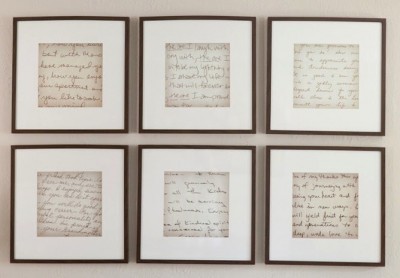
excerpts from old letters
Excerpts from old letters can be framed behind glass and hung up. I love this for it’s simplicity. It makes for very unique wall art as well as a conversation piece in your home.

Old toys

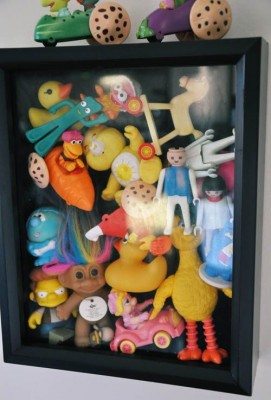
for toys
Toys that you or your children loved can be displayed under glass as well.  Better displayed than stuffed in a box somewhere.

Vintage Hankies


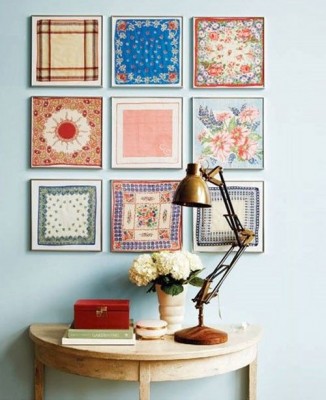
hankies
Do you have any vintage hankies from previous generations hiding away somewhere? You can frame them as well and use them as wall art!

Sentimental family artifacts


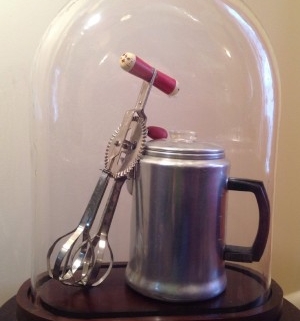
Under glass
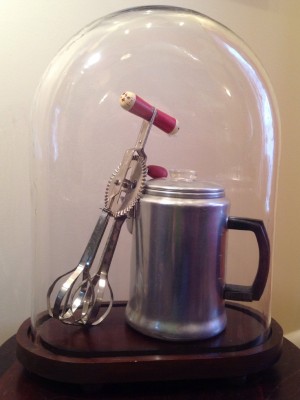
You can also keep sentimental family artifacts under glass to view, enjoy and remember. Also a great conversation piece.

Ticket Stubs

ticket stubs
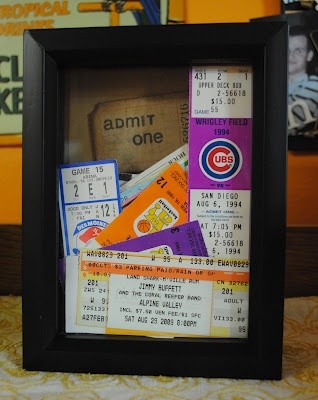
Last but not least, you can save those ticket stubs and everything related to that specific night in a shadow box frame.  Of course before you do any of this you need to really determine what items are truly treasures and keep and display only those items that truly mean something very special. That requires making some tough decisions if you are faced with a few Rubbermaid bins full of memories and sentimental momentos.

De-cluttering will help you to determine exactly what is truly meaningful. And once you figure that out, you can then display and honour those treasures!

I Felt Cheated Until I Lived With a Professional Organizer

It’s not very ofter that I have guest blogger on my site, but my husband insisted that he write a post about living with an organizer.  So, below you have it.  A husband’s point of view.

I have always thought I was a fairly neat and tidy person. Although I will admit that I am not the most organized person in the world, I didn’t really think I was disorganized. Let me tell you that living in the Toronto area and being the husband of a Professional Organizer will let you find out just how organized or disorganized you really are!

In the beginning you may be a tad annoyed with the way things seem to be organized and the need to keep it up, but eventually you become appreciative of those things that may have bothered you in the past. Let me give you a couple of examples:

Clothing organized

For a guy, how easy is it to maintain your wardrobe? You buy something new, pick up dry cleaning or put away your laundry by hanging it up or putting it in the drawers, right?

organized man clothes

Not so. I have learned that it helps if you hang your clothes according to colour and have all your shirts hanging the same way. Not only does this give you a neat appearance but it makes selecting your clothes a whole lot easier.

In and out

One in, one out rule for clothes – Originally this rule just seemed just plain silly to me. Why would you want to get rid of something just because something new came in? Well, it turns out this may just be the best advice an organizer can give you. Rather than having closets that are crammed to the point where nothing else will fit, or piled in a dresser drawer that is overflowing, I have learned that if you follow this simple rule you will always have a neat and organized clothing space with easy to find whatever you need.

Organized Kitchen

Just last week I put a frying pan away in the “wrong spot” and was “politely” reminded of where it lives. I use this as an example of why every thing needs a home. I can’t tell you the time I have wasted in the past looking for things that were in the wrong place.

organized cubby kitchen

A lot less time spent looking for things and a lot less frustration is the result of putting things back where they belong. Lesson learned.

Giving to the community

Giving back.  This is by far the most important lesson learned from living with a professional organizer. Rather than tossing out things that I no longer require I take the time to look at it and decide if it is in good enough shape to donate. There are so many organizations that can use and even depend on donations to help the less fortunate. Everything from clothing to toys to small appliances and even items of value that can be sold at charity stores or auctions can be used to help someone else.

So, yes, being married to a professional organizer can have its challenges, but it really does make life more calm, less stressful and more giving. I highly recommend it and I’m not just saying that because my wife is standing over my shoulder. Really.

Doug Ward, happy husband of a professional organizer.

Helping Your Parents Downsize To A New Space

Moving is widely recognized to be among the most stressful events in a person’s life.  Combining the practical challenges of sorting through years of clutter and the sense of loss that comes with letting go of treasured possessions, a move can be a physically and emotionally draining experience.

unhappy seniors


These difficulties are typically magnified in the case of aging parents, with the move often linked to an intimidating life transition. Here are a few tips for helping your parents downsize calmly and compassionately.

Start with the Clutter

It’s best to begin by organizing belongings that your parents have little emotional attachment to. Ease into the downsizing process by cleaning out junk drawers, storage closets, basements, and attics. These out-of-the-way spaces likely contain items that your parents don’t use or even think about very often.  Get rid of expired medications, broken items, and paper clutter, such as old magazines, newspapers, and mail. Your parents may even feel relieved to clear out certain unnecessary items that they’ve been meaning to get rid of for years.

Consider the New Space

Whether your parents are moving to an assisted-living facility or a smaller home, it’s a good idea to know the exact size of their new home. Assisted living facilities can provide this information or you may need to go and measure the dimensions yourself. Consider marking off a comparable amount of space in your parents’ current home, so they can start to envision how much they can realistically take with them and how their possessions will fit. This can help to rule out large pieces of furniture that would overcrowd the new home.

Focus on the Positive

Help your parents to research the names of local charities where they can donate some of their belongings. Particularly if your parents enjoy helping others, it may be easier for them to let go of certain possessions if they know that someone else can make use of them. Allow your parents to tell stories about when they bought these items, when they used them over the years, and talk about how much a new family could benefit from these items just as your parents have.

Take Your Time

It’s often tempting to just get the decluttering over with by trying to tackle it all at once; however, rushing this daunting process is likely to place a great deal of physical and emotional strain on both you and your parents. Instead, break the organization into short sessions, ideally spaced out over weeks and months. If it’s absolutely necessary to get your parents moved quickly, be sure to take frequent breaks. Take things slowly and give your parents time to say goodbye to various belongings. You may need to create an ‘undecided’ pile, and allow your parents to evaluate their possessions more than once as they gradually adjust to the process of letting go.

Have questions about downsizing to a new space?  Contact us here for more information on how we can help make the transition as seamless as possible.