5 Creative Downsizing Tips for Seniors

For seniors who are ready to downsize, there are many options available. Perhaps you are moving from a house to a smaller home or apartment, or to a retirement community instead. Whichever you choose, the transition will involve paring down belongings to accommodate a smaller physical space. To make the process easier in retirement, here are five creative strategies.

1. Only Create Two Piles: Yes or No

As you go through household items, the number of memories that will crop up will likely be many. It might be tempting to create a “maybe” pile!

But a more effective strategy for reducing the number of items is to stick to only two piles. One is “yes” (keep), and one is “no” (toss, recycle, or give away).

As you pick up each item, ask yourself if you have used it within the past year. If not, why would you pack it up to take to the new residence?

2. Invite Family Members Over

Rather than going it alone, consider inviting kids and grandchildren over to help you with the packing process. Not only can having more people around help you feel supported during this life transition, but you will also have bonding time.

While they are there, share some of the stories behind your favorite mementos. This loving atmosphere is a wonderful way to spend the days leading up to the move.

3. Take Photos of Keepsakes

If you have large collections of figurines or something else, they will take up valuable space in your smaller residence and likely stay in boxes there. You still want to hold onto the associated memories but simply won’t have the storage room. What to do?

The creative solution is to keep some and take photographs of the rest, rather than keeping them all. Then, print out the pics and create a photo book to look through every time you want to remember the good times associated with the possessions.

Box up your photos

4. Use Clear Bags

If you plan to store items in bags, use clear ones temporarily. The concept here is, well, transparent (excuse the pun!).

Choosing clear rather than black trash bags allows you to see what is in each one immediately. Otherwise, it’s a guessing game, and you might accidentally toss the wrong one.

5. Hire a Professional

Enlisting the help of an expert organizer can save you a lot of stress while downsizing. Rest assured that ClutterBGone involves you in all plans and decisions, only moving forward with your approval.

We work around your schedule and lifestyle, and we can help you unbox after moving day in addition to before it. Finally, our friendly organizer can help you bring touches of home to the new place so that you can still enjoy the beloved memories made over the years.

Conclusion on Downsizing

Deciding what to keep can be difficult, no matter your age. But the time you take to do so can help make moving to a smaller place or seniors’ community easier as stress-inducing clutter won’t surround you.

Home Downsizing in 4 Easy Steps

Home Downsizing in 4 Easy Steps

If you are transitioning to a new home, then downsizing your belongings is a good idea. Here is a four-step plan to do so with less fuss.

Step 1: Start with the big stuff

Deciding what stays and what goes is easier when you feel like you’re making good progress. Start by making decisions about the big-sized items, such as the washer and dryer.

Ask yourself if it’s worth moving certain appliances to the new home, especially if you’re leaving the province. If the new residence has them already, then do you prefer yours to the ones there?

As for large collections, such as dishware, do you plan to keep them? Or, does selling or gifting them make more sense?

If you find it tough parting with the whole collection, consider keeping only your favourite pieces from it. Next, go through other items, such as large gifts you received, and think about whether you want to take them to the new place.

Home Downsizing in 4 Easy Steps

Step 2: Sort into four piles

The next step for home downsizing effectively is to create four distinct piles. One pile is for giveaways; these are items that you will give for free to family or friends.

The other sorting stations to create are donations, for-sale items, and trash. If the item still has usefulness, then consider donating it to a non-profit organization.

Could you use some extra cash to help with the move? If so, then put items into the sale pile and use online marketplaces to make a few bucks.

The trash mound goes to the dump, whether you drop it off yourself or hire someone to come pick up the items. These things are broken or unusable at this point.

Step 3: Go through each room

After deciding on the big items, it’s time to go from one room to the next to deal with the smaller possessions. Certain things hold memories, and it can be tough to declutter those ones. Give yourself time to reminisce as you go through each one to honour it, and then decide if has a place in the new home.

As you go through the rooms, have someone with you during this emotional job. A professional organizer can provide support as you decide which of the four piles to put things into during the downsizing process. We are only a phone call away and understand useful ways to declutter all or part of a home.

Step 4: Go easy on yourself

This process is a tough one, so give yourself regular breaks from sorting to relax. Spread out the process over several weeks, if possible, so that it does not feel overly burdensome.

Also, if you have an off day, that is normal; try to be more productive the next time you battle the clutter. The downsizing process brings up many emotions and memories, but know that you will get through it, and look forward to the next stage in your life in a new home.

The future residence is where you will make new memories. Many positive moments await you there. As always, if you need a little extra support and guidance, give us a call. We’re back in action and look forward to helping out!

organizing your kitchen

5 Simple Steps to Organize Your Kitchen Effectively

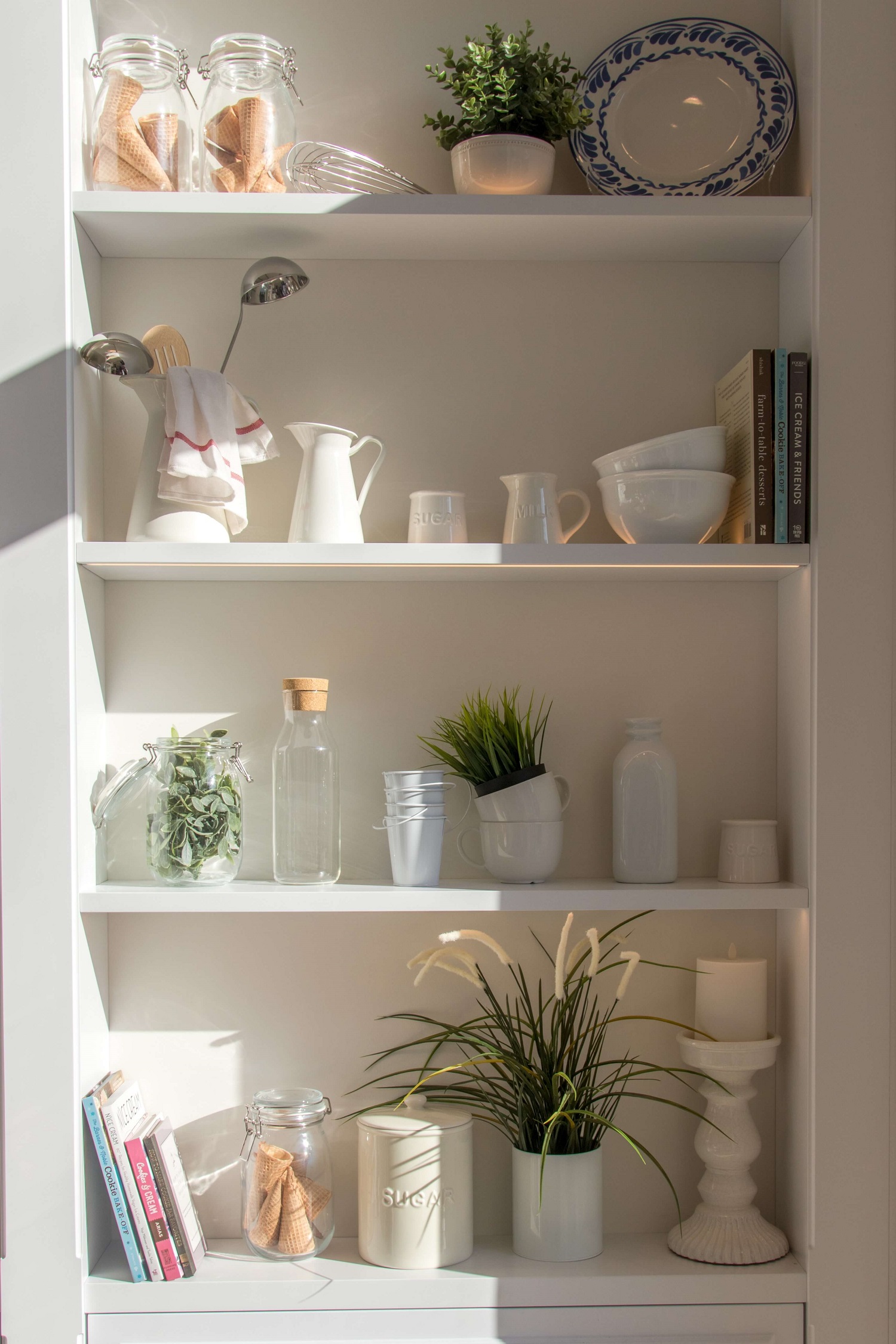
The kitchen is a room that gets a lot of use. Rather than avoiding using it because of the clutter, use these tips to organize your kitchen cabinets and shelves better than before, so you look forward to making dinner for the family.

Step 1 – Use Storage Containers

To organize your kitchen effectively, group similar items to help them look tidier, as well as making them easier to find when you’re cooking. Baskets and bins without lids are great for snacks as the kids can quickly reach inside to get what they need when hungry after school.

Look for ones that match or are identical to create a uniform look, especially on open shelving where there’s no hiding away the clutter. Also, collect loose items like tea bags into clear canisters so you can see when they’re running low and refill them.

organize your kitchen

Step 2 – Utilize Open Spaces

Look at awkward spaces around the fridge or elsewhere that you can use for additional storage when looking to organize your kitchen. For instance, there might be a gap between the fridge and the wall where you can add a shelf for extra cups and bowls.

Also, consider hanging items from the wall rather than putting them in cupboards where they would take up precious space. Hang pots and pans by attaching a metal railing to the wall and adding hooks; select hooks that allow the cookware to hang flat against the wall.

Step 3 – Downsize the Kitchen

Before you start moving things around, decide if you really need everything currently in the kitchen. For example, do you both sets of measuring cups? The chances are good that if you donate one of the sets, you will not miss it.

Go through each cupboard and drawer to find duplicates to donate or sell. At the same time, look for unused items that are taking up space. Each one you part with will free up room in the kitchen.

Step 4 – Adjust Shelves

Have you adjusted your kitchen cabinets’ shelves lately? If not, then you could be missing out on better organizing the cabinets.

Create more vertical storage space by moving shelves so that they are only slightly higher than objects. If you have room for another shelf, the local hardware store can cut a new piece of plywood quickly and easily to fit.

organizing your kitchen

Step 5 – Group Glassware and Dinnerware

If you see a chaotic array of mugs, glasses, and dishes when you open the cabinet, it’s time to rethink how you’ve put them on the shelves. Devote lower shelves to the glasses and mugs you use every day and put frequently-used bowls and plates within easy reach too.

Special occasion items can go higher up, as they used less often. Also, store glasses with the rims up to protect them from damage.

Final Words on Organizing the Kitchen

At the end of each day, look at the countertop and remove any items that don’t belong there, such as the kids’ schoolwork or random items unpacked from the dishwasher. A clean countertop makes a kitchen look instantly more attractive.

Reduce clutter and boost storage by using the tips above, as well as reaching out to our professional organizers for more ways to improve your kitchen’s functionality. There are many ways to reduce clutter without having to do a major kitchen renovation.

decluttering when downsizing

Decluttering Hacks for Downsizing Your Home

Decluttering a home because you are downsizing can be an anxious feeling. You are probably feeling like you will need to make some hard choices with what stays and what comes with you. The key to decluttering when downsizing is to get rid of things in your life that you don’t need, while keeping what you need. It sounds simple enough, right?

However, when it gets down to reviewing specific items, you may feel like you are overwhelmed with how many choices you have to make. We’re going to make the whole process easier for you by giving you some neat decluttering hacks for when you have to downsize your home.

Follow the 1 Year Rule

You are naturally going to try and hang onto things that, practically-speaking, you should just get rid of. We are talking about sentimental things and items that you feel may be used some day. However, if you haven’t used something within the past year, you probably won’t be using it in the coming year either. If you probably won’t use it the coming year, you probably will never use it at all. Let this time of downsizing finally be the time when you part with things that you aren’t using.

take pictures when decluttering

Take Photos of Sentimental Items

Some things are truly sentimental with memories that you simply find unbearable to part with. Not to worry! There’s a solution for that, which is to take photos of them. This is especially useful for unique and bulky things that will take up too much space in a downsized home. Memories last a lifetime, but having pictures of your sentimental items can help those memories stay fresh. Besides, you can have as many photos as you want, since digital photos take up no physical space.

Now that you know some decluttering hacks, the whole process of decluttering while downsizing should be easier for you. If you are still feeling overwhelmed with the whole process, that’s alright! ClutterBGone can help you with the entire process, so you can focus on other aspects of your move. Downsizing your home can be stressful enough, so make it easier on yourself and have a helping hand from professionals who know how to make the decluttering process a smooth one.

downsizing tips for seniors

5 Downsizing Tips for Seniors

Downsizing is an emotional challenge for some seniors while to others, it’s a joy – it all depends on preparation. Most seniors enjoy more free time by moving to a smaller house that requires less upkeep. These are the seniors who are open to the idea of downsizing. Before the time comes, it’s important for seniors to sit and discuss downsizing options with their family or friends. Here are a few downsizing tips for seniors:

Downsizing Tip 1: Plan ahead

Planning is the essential component of downsizing for seniors. The conversation around downsizing should start as early as possible. Let the senior know you respect their freedom of choice. Discuss with them why they should consider moving, where they will be moving to and the moving budget. Compare the costs of moving to the new space and all the pros of the new space compared to the current space.

Downsizing Tip 2: Start small

Start sorting out things as early as possible and start with the smaller rooms. Sort all the things you want to get rid of room by room. Starting with the smaller rooms first may be less overwhelming than diving into the bigger ones first.

For this, start early and start getting rid of things one by one. You can start donating what you don’t need or selling them as early as the decision to move is made.

downsizing tips for seniors

Downsizing Tip 3: Eliminate the rooms absent in the new home

Before you even start donating things, make sure you eliminate the things in the rooms that you don’t have in the new house. Some of these rooms house important items that you just can’t get rid of. Relocate these to other rooms in the new space and donate, sell, or toss the others you don’t need.

Downsizing Tip 4: Declutter

When it comes to moving, getting rid of what you don’t use isn’t an option. Make two piles, the yes and no piles – but no ‘maybes’. Otherwise, you will find yourself with a maybe pile that is bigger than the other two. Take a good look at every item in the house and if it’s not something you use regularly, that’s a no and if you use it regularly, it’s a yes.

Downsizing Tip 5: Consider legacy gifts

Seniors have a hard time letting go of some things. There will be items that the senior can’t or won’t let go of, and that’s alright. The antiques and other sentimental items don’t have to go as long as they don’t impede the move. Let the senior decide on what to do with the sentimental items that won’t fit in the new home. Most prefer giving these special items to family as a sign of gratitude. Just always ensure that they know they have a voice in the move.

Downsizing for seniors isn’t easy but if you have a plan and clear communication, moving can be a smooth and peaceful transition. Remember not to force anything, simply suggest and wait for them to make a choice.

If ClutterBGone can be of any assistance in your transition process, reach out to us here! Sometimes just a little extra support and guidance is all you need.

elderly parents moving

How to Talk to Your Elderly Parents About Downsizing

Talking to your elderly parents about downsizing is one of the most challenging things. For the talk to yield positive fruits, you have to be cautious and steer the conversation in a subtle manner. The move might seem practical for the senior, but the thought of moving can provoke strong emotions. As the responsible party, you have to make the senior understand why this is in their best interest and why it has to be done which is challenging but not impossible.

Start the discussion as early as possible

How do your parents or the seniors in your life imagine their future? Before the move is immediately necessary, begin talking to them about other options to make the transition easier. Make sure you discuss the topic multiple times and show them the pros and not the cons of moving. This way, arriving at a decision you are both comfortable with is easier. Bring up a neighbour or an old friend who has downsized and talk to the senior about the advantages of the move.

Let the senior stay in control

Before you can figure out what to tell your elderly parents, listen to them first. Downsizing is emotional as it makes the seniors feel like they are losing control over their lives. State one fact before anything else that the decision to downsize is ultimately theirs and you are here to provide support and make suggestions. Never impose but instead, ask gentle questions about the current living situation and let them know how downsizing can help them improve and live a happier life.

elderly parents moving

Air your concerns

Most seniors respond best if you are open and honest. Instead of imposing, making choices, or controlling them, share your worries about their living conditions. Most of our elderly parents don’t like it when their children worry so much about them. For this reason, they won’t be defensive or feel upset if you express your fears and the desire for them to be safe and happy.

Downsizing is a sensitive topic for the elderly and it needs a subtle approach. Make plans with your parents if you want a smooth transition and figure out their idea of downsizing. Get to understand what is sensitive about it and how to best approach that. Elderly parents feel attached to their homes and that bond can be hard to break. Do it bit by bit and in a considerate manner and let the elderly parent feel in control at all times. Let them feel their decision is respected and appreciated.

If at any time you need a little extra help and support, we are just a call away to help with all your downsizing needs!

downsizing tips for seniors

A Downsizing Checklist for Caregivers

Moving is a challenge for everyone and is one of the high-stress life events in life. It becomes tougher when you are a caregiver and have to move a senior. Most people find themselves in a crisis where you have to move the senior in a limited amount of time. Planning time is minimal, and you need to have everything in order before making a move. Here is a downsizing checklist for caregivers.

Plan Ahead

This applies if you have time, and the senior is willing to move as this sometimes becomes a challenge and eats into the available time. The move is now imminent, and there is no other option. Start decluttering as early as possible. Take everything into consideration and determine what to give away, sell, or throw away. Clean the house and organize in stages and make sure to measure the furniture. You need to know if the furniture fits the downsized house you are moving into. Set a moving date and check with family and friends for a moving company recommendation.

Start Packing

You now have what is moving with your senior and what goes away. Organize everything you have in boxes and assign different boxes for essential items to avoid confusion. It also helps in knowing what goes to which room and so forth.

Identify the critical and fragile items and separate them from the rest and make sure their boxes are well marked as FRAGILE, so the movers handle the boxes with care. If packing is posing a challenge, get family or friends to help.

Moving

You know what is going and what goes away, so you have a good idea of the transport you need. If you are using friends or family members, communicate with them. Also, make sure you have all the necessary gear and muscle to help you move.

If you are using a moving company, the contracts should be in order and in writing too.

downsizing checklist for seniors

Settling In

When downsizing for caregivers, the challenge posed to the caregiver is helping the older person settle in. You have moved in, and the unpacking starts. After you are done, it’s up to the caregiver to update the senior’s addresses in all relevant institutions. Don’t leave the senior assuming all is well; check in regularly after the move and make sure they are happy and thriving in the new community.

The reason why your seniors need a smaller home is not as important as their safety and happiness. Take comfort in knowing the senior is cared for and happy after the move. If ever you need a little extra support in the downsizing process, don’t hesitate to reach out!

downsizing seniors

How To Help Our Seniors With Downsizing

People have different responses to getting old but one thing we can be sure of is that ageing is inevitable. When people get to the age where they are regarded as senior citizens, one of the problems they face is moving and downsizing and making difficult choices of what to keep and what to let go. This period is usually very emotional for some, however can be something to look forward to and become excited about.

Here are a few steps to consider when helping a senior downsize.

Consider Their New Home

Downsizing usually involves moving into a smaller and more manageable environment and the new space is the first thing that must be considered. Ideally, it is not a process that should be rushed. You have to check out their your new home’s space – the floor plan, the kind of environment and community that is being entered into.  Is your senior downsizing into a nursing home or assisted living facility? Are they moving in with friends or family, a retirement community, or are they buying or renting a smaller house or condo?

The Seniors Guide To Downsizing

Take An Inventory Of Their Current Home

The next step usually involves taking an inventory of items in different parts of their current home. It is advisable to start from the part of the house with the biggest items or the area of the house that has the most stuff.

While doing this, you will be able to identify different categories that items might fall under e.g. Regularly used objects, sparsely used objects and high-value objects. Every room in their house must be checked so you don’t miss anything important – ensuring everything is well-organized when moving and they don’t end up with items they don’t need in their new space.

Do They Need It?

De-cluttering is a very important step in the downsizing of your seniors. You have to ask yourself certain questions as you pack-up and box items like:

  • Do they need this item? Is it used regularly?
  • Will the item fit into their new space easily?
  • Is the item of high-value financially?
  • Do they have multiple versions of the item?
  • Does the item limit their mobility or accessibility in their new space?
  • Do they love it?

Answers to such questions are usually difficult but very necessary when planning their move.

Find Innovative Ways To Take Care Of Disposed Items

You’ve sat with your senior and have decided what belongings will make the move and which ones won’t. When disposing of the items that won’t be moved with them,  you need to decide what to do with them. You can have the items donated to charity or given to friends or family members that may find the items valuable. Another option is to have an auction or sale especially when some of the items are still valuable and would be able to generate some needed income. When downsizing, it is important to always get rid of old and harmful items that can’t be repaired no matter how much sentimental value they carry – you don’t want to keep harmful objects in their new environment as your senior approaches their golden years.

As we mentioned above, this process can be emotionally draining for some so it best be done with the help of loved ones, family or friends. However, if it gets too difficult, you can always consult with us. We love assisting our seniors!

Successful Transitions to Assisted Living

Steps for Successful Transitions to Assisted Living

Making the decision to move a loved one into an assisted living facility is often very difficult for all who are involved. Every situation is unique, some people recognize that they are ready to downsize and significantly reduce their domestic responsibilities while others may be extremely resistant to the very thought that they even consider leaving their home and their independence for a facility. Whichever circumstance that you find yourself in with your elderly relative, there are ways to make the transition easier for all involved.

Step 1 Transition to Assisted Living: Communication

It is very important to develop and maintain open lines of communication. If your relative is reluctant to move speak to them gently, with care and understanding. Let them know that their feelings are valid and offer reassurance that this does not mean a loss of independence – as this is typically the greatest fear. Point out all the things that they will no longer have to be responsible for such as taking the garbage out, mowing the lawn or keeping house. Help them to see that this leaves them free to fully explore their interests and activities at their leisure.

Successful Transitions to Assisted Living

Step 2 Transition to Assisted Living: Visit the Facility

Visit the facility well in advance of the move. Meet the staff and other residents – take a tour and become familiar with all the activities that are scheduled for your relative to participate in. Many facilities will allow and encourage your relative to join activities of their interest before the move has been finalized as a means to increasing familiarity and comfort in the decision.

Step 3 Transition to Assisted Living: Plan and Execute

A move such as this takes a lot of planning. Ensuring that your relative is involved in all decisions will help them to feel that they do in fact remain in control of their lives. Seek help from other family members or engage a professional who specializes in assisting families and their elderly relatives in transition. Make a plan together and ensure that you offer validation that it is a difficult transition and that while there are changes and some losses there are many gains as well.

Certainly these transitions are emotional. They represent significant milestones in the lives of all who are involved. Communicating with love and care goes a long way towards easing everybody’s feelings on the matter. Making informed decisions together with your loved one allows them to retain control and independence. Meticulous planning for the move and enlisting as much positive support as possible also contributes to a positive experience for all.

If you find you need support, we can work side by side with you or your parents and assist in de-cluttering, sorting and paring down possessions and help to create and preserve a legacy of treasures and memories that will never be forgotten. We’ll provide the knowledge and decision-making support to organize the home for sale if needed as well. With patience and guided assistance we help find new homes for unwanted and unused items through sales, donations and recycling, and ensure that vital documents and papers are in order and available for quick and easy access. Reach out!


tips for helping the elderly move

Tips For Helping the Elderly Move

Making the decision to move an elderly family member out of their home is difficult but is more often than not necessary for reasons of health and safety. Below you will find important tips for a smooth transition.

Tip 1 Helping The Elderly Move: Communication

This is by far the most important point in the beginning. Open and honest communication about why the move is necessary and brainstorm together what will work best. Always bearing in mind that your relative is likely to have very mixed emotions about moving. Validating their emotions is important. Be understanding and really listen to their desires. Together, set up a concise plan.

Tips for helping the elderly move

Tip 2 Helping The Elderly Move: Enlist Support

Reach out to other family members to help with the move, the more the merrier as they say. Also consider the support of a professional organizer. They are skilled in this type of situation and have a lot to offer in terms of advice as well as strategies for an easier transition.

Tip 3 Helping The Elderly Move: Clean and Organize

As you begin to sort and pack be sure to clean the items before storing or taking them to the new home. Some items will be harder to part with than others, this is true of anybody but for someone who may have a lifetime of memories in their home it is daunting. Listen with patience to the stories the items have and offer reassurance that things that are not going with then will be well looked after.

Tip 4 Helping The Elderly Move: Be Aware of Emotions

You’ve planned, you’ve packed and moving day has arrived. Be aware of the emotional state of your elderly family member and understand that it will be a difficult day. If your elderly relative is moving into an assisted living situation work with the home to plan what the day will look like. Many places will have supports in place for the move, there may be activities for distraction and they may also be paired with a new buddy for the day to introduce them to their new surroundings. If possible it may help to arrange furniture as closely as possible as it was in the old home. Ensure that photos are hung and important items are put away.

This is a tough transition for all and it isn’t over the day the move happens. You will want to keep a close eye on your relative over the following months as the emotional fallout can be heavy and overwhelming.

If you are facing the challenge of helping your elderly parents “smart size” into homes that are manageable, often emotional ties to furniture and keepsakes make it difficult and challenging for you and your parents to make decisions. We often hear the question “how do I even begin to sort through my treasured items and memories?” That’s when we can step in. Reach out if you need support.